





What's Happening?
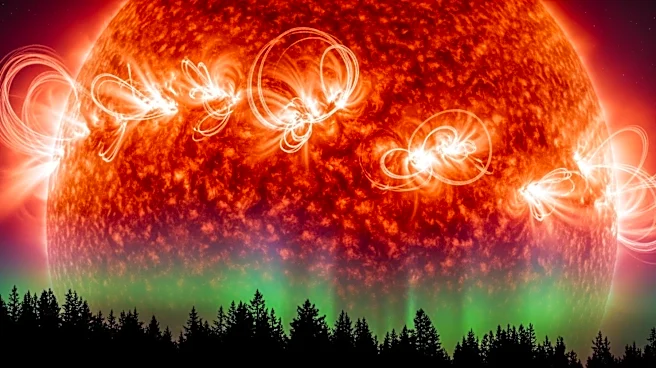
A powerful M5.7 solar flare erupted from the sun on May 10, accompanied by a coronal mass ejection (CME) that could potentially impact Earth. The flare originated from sunspot region AR4436 and peaked at 9:39 a.m. EDT. The CME is expected to deliver a glancing
blow to Earth around May 13, possibly triggering minor geomagnetic storm conditions. This could enhance aurora displays across the northern U.S. and the U.K. The solar flare caused radio blackouts over the Atlantic Ocean, affecting high-frequency radio communications. Solar flares are categorized by intensity, with the M5.7 flare being significant enough to disrupt radio signals.
Why It's Important?
The solar flare and subsequent CME highlight the dynamic nature of solar activity and its potential impact on Earth. Geomagnetic storms can affect satellite operations, power grids, and communication systems, posing challenges for technology-dependent sectors. The potential for enhanced aurora displays offers a unique opportunity for skywatchers, particularly in regions not typically known for such phenomena. Understanding and predicting solar activity is crucial for mitigating its effects on critical infrastructure and ensuring the reliability of communication and navigation systems.
What's Next?
As the sunspot region continues to rotate into Earth's view, the likelihood of further solar flares and CMEs increases. Monitoring by agencies like NOAA's Space Weather Prediction Center will be essential to provide timely warnings and mitigate potential disruptions. Stakeholders in the aviation, maritime, and communication sectors will need to remain vigilant and prepared for possible impacts. The event also serves as a reminder of the importance of investing in space weather research and infrastructure to enhance predictive capabilities.