




What's Happening?
NASA is encouraging public involvement in its space exploration efforts through various citizen science projects. These initiatives allow individuals to contribute to scientific research without needing to be professional scientists. Participants can
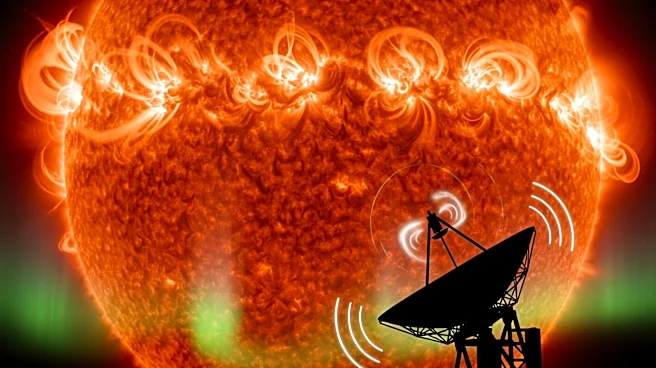
engage in activities such as testing plant varieties for space farming, monitoring solar activity, and analyzing data on how life adapts to space conditions. One project, Space Umbrella, involves sorting data from NASA's Magnetosphere Multiscale mission to understand solar storm interactions with Earth's magnetosphere. Another, Growing Beyond Earth, collaborates with schools to grow plants that could serve as astronaut food. These projects aim to make space travel safer and more sustainable by involving the public in meaningful scientific work.
Why It's Important?
The involvement of citizen scientists in NASA's projects democratizes space exploration, allowing a broader segment of the population to contribute to significant scientific advancements. This approach not only enhances public understanding and interest in space science but also accelerates research by leveraging the collective efforts of volunteers. The data collected and analyzed by these citizen scientists can lead to breakthroughs in understanding space environments and developing sustainable living conditions for astronauts. This is crucial for future long-duration missions, where growing food and managing radiation risks are vital for astronaut health and mission success.
What's Next?
As these citizen science projects continue, NASA is likely to expand opportunities for public participation, potentially increasing the scope and impact of these initiatives. Future projects may involve more complex data analysis or new areas of research, further integrating citizen contributions into NASA's scientific endeavors. The success of these projects could inspire other scientific organizations to adopt similar models, broadening the role of citizen science in research and innovation.
Beyond the Headlines
The ethical dimension of involving the public in scientific research is significant, as it fosters a sense of ownership and responsibility towards space exploration. This participatory approach can also influence educational systems, encouraging STEM education and inspiring the next generation of scientists and engineers. Additionally, the data and insights gained from these projects could have applications beyond space exploration, such as improving agricultural practices on Earth or enhancing our understanding of solar-terrestrial interactions.