


What's Happening?
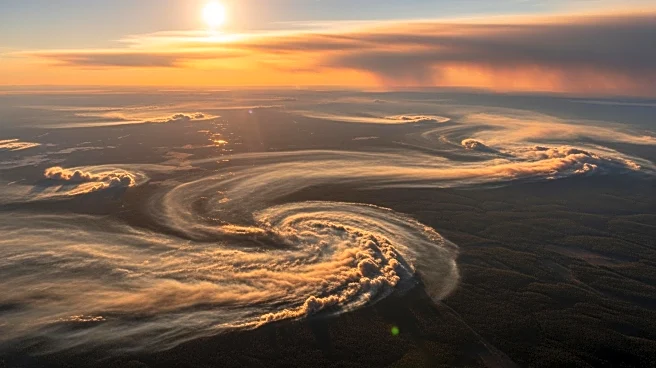
The Copernicus Sentinel-2 satellite has captured striking images of the ongoing bushfires in Australia, particularly in the state of Victoria. These images reveal the extensive damage caused by the fires, including dark burn scars across the landscape.
The fires have led to significant disruptions, including the closure of hundreds of schools and the evacuation of entire communities, leaving thousands without electricity. The Sentinel-2 satellite, part of a constellation of Earth-observation satellites, uses high-resolution multi-spectral cameras to capture images in various spectral bands, including visible, near-infrared, and short-wave infrared. These capabilities allow for detailed analysis of vegetation conditions, soil moisture, and fire impacts.
Why It's Important?
The imagery provided by the Sentinel-2 satellite is crucial for emergency response and recovery planning. By delineating burned area boundaries and estimating the extent of the damage, authorities can better coordinate relief efforts and plan for long-term recovery. The satellite's ability to highlight changes in vegetation and charred ground is essential for creating fire-severity indicators and distinguishing between smoke, clouds, and burn scars. This data supports efforts to stabilize soils, protect waterways, and restore habitats, which are critical for the ecological recovery of affected areas. The ongoing monitoring by Sentinel-2 also aids in understanding the long-term effects of the fires and the natural regeneration of the landscape.
What's Next?
As the bushfires continue to affect Australia, the Copernicus program will likely maintain its focus on providing updated imagery to assist in ongoing emergency response efforts. The data collected will be used to refine fire-severity indicators and improve predictive models for future fire events. Additionally, the long-term monitoring capabilities of Sentinel-2 will be instrumental in tracking the recovery of the landscape and assessing the effectiveness of restoration efforts. This information will be vital for policymakers and environmental agencies as they develop strategies to mitigate the impact of future bushfires and enhance community resilience.
Beyond the Headlines
The use of satellite imagery in disaster management highlights the growing importance of technology in addressing environmental challenges. The ability to monitor and analyze natural disasters from space provides a global perspective that is invaluable for understanding the scale and impact of such events. This technological advancement also underscores the need for international collaboration in sharing data and resources to tackle global issues like climate change and natural disasters. The insights gained from satellite data can inform policy decisions and drive innovation in disaster preparedness and response strategies.