
What's Happening?
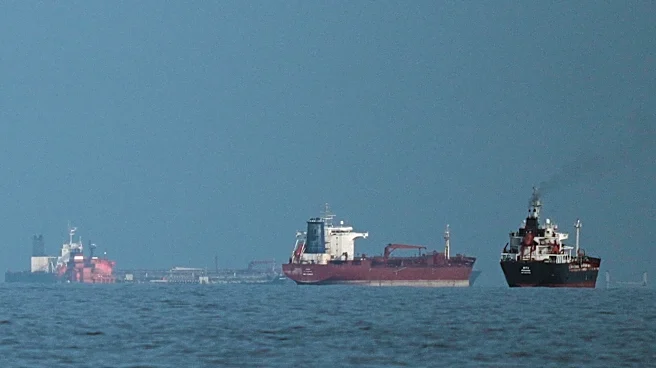
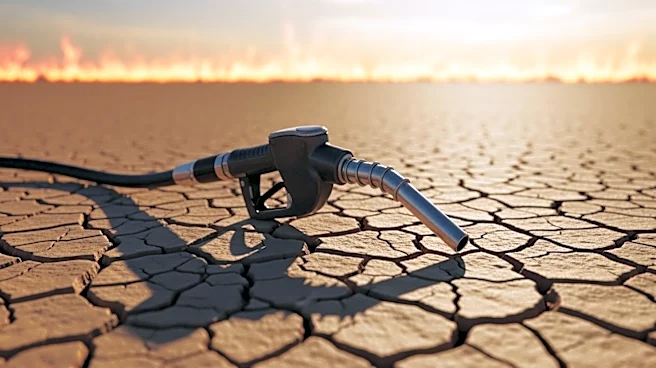
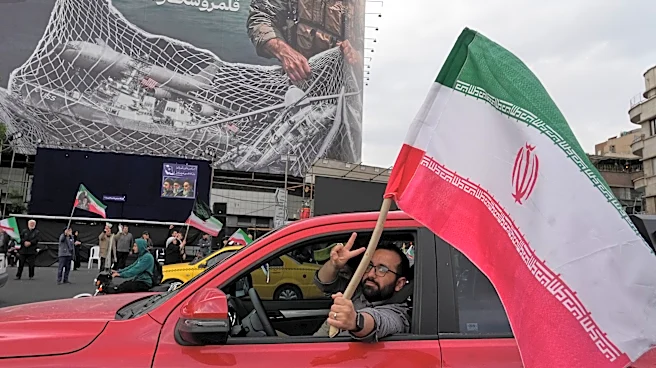
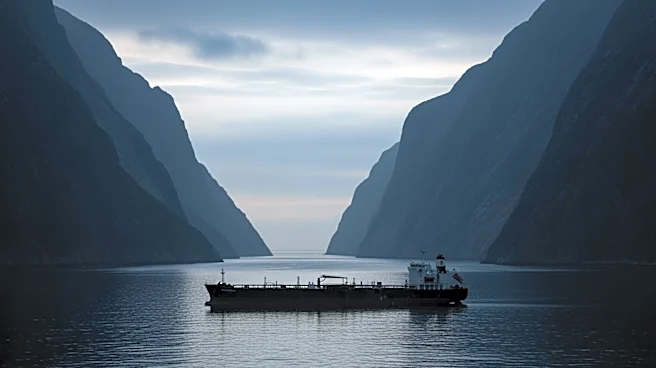
The United States has initiated a blockade of the Strait of Hormuz, a critical oil passage, in response to failed peace negotiations with Iran. This action has significant implications for India, which
recently resumed importing Iranian oil after a seven-year hiatus. The blockade coincides with the expiration of a U.S. waiver that allowed India to purchase Russian crude oil, further straining India's energy supply. India, which imports over 85% of its crude oil, is now facing a supply squeeze as it loses access to both Iranian and Russian oil. The situation is exacerbated by the ongoing conflict in the Middle East, which has already impacted India's economic indicators, including a slowdown in private sector activity and increased inflationary pressures.
Why It's Important?
The blockade and the expiration of the Russian oil waiver place India in a precarious position, highlighting the challenges of balancing its energy needs with geopolitical pressures. As the world's third-largest oil importer, India's energy security is crucial for its economic stability. The loss of access to Iranian and Russian oil could lead to higher energy costs, affecting everything from industrial production to consumer prices. This situation underscores the broader geopolitical tensions and their impact on global energy markets, potentially leading to increased oil prices worldwide. The U.S. actions also reflect the complex interplay between strategic alliances and economic dependencies, as India navigates its relationship with both the U.S. and Russia.
What's Next?
India may need to seek alternative energy sources to mitigate the impact of the blockade and waiver expiration. This could involve increasing imports from other regions or accelerating domestic energy production initiatives. The U.S. might consider extending the waiver to stabilize global oil markets, but this remains uncertain. The situation could also prompt India to reassess its strategic autonomy in energy policy, balancing its economic needs with international diplomatic pressures. The ongoing Middle East conflict and its implications for global oil supply will likely continue to influence international relations and economic strategies.