



What's Happening?
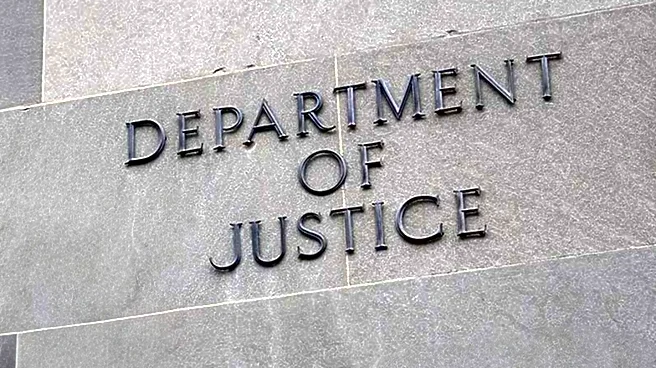
Attorney General Todd Blanche has finalized a new federal regulation and initiated a program designed to allow eligible individuals to restore their federal firearm rights. This initiative marks one of his first actions as Attorney General. The program aims
to provide a pathway for individuals who are currently prohibited from possessing firearms under federal law to regain that right, provided they meet specific criteria. The Department of Justice has released an introductory video explaining the program, detailing who can apply and outlining the application process. This development signifies a new approach by the Department of Justice to address firearm rights for certain individuals, potentially impacting a segment of the U.S. population previously barred from firearm ownership.
Why It's Important?
The introduction of the Federal Firearm Rights Restoration program is significant as it directly impacts the Second Amendment rights of individuals in the United States. This program could offer a legal avenue for many Americans to regain their ability to own firearms, which has broad implications for personal liberties and public policy. The criteria for eligibility and the process for restoration will be crucial in determining the program's reach and effectiveness. It also reflects a potential shift in the Department of Justice's stance on firearm regulations, balancing public safety concerns with individual rights. The program's implementation will likely be closely watched by gun rights advocates, legal experts, and public safety organizations, as it could set precedents for future firearm-related policies and legal interpretations. The initiative underscores the ongoing national debate surrounding gun control and individual firearm ownership rights.
What's Next?
The Department of Justice will proceed with the implementation of the Federal Firearm Rights Restoration program. Eligible individuals will be able to apply through the newly established process, which will involve a review of their specific circumstances to determine if their firearm rights can be restored. The program's success and any potential challenges will likely be evaluated over time, possibly leading to adjustments in regulations or procedures. Stakeholders, including gun rights organizations and legal advocacy groups, will likely monitor the program's application and outcomes, potentially offering feedback or legal challenges. The program's impact on public safety and the exercise of Second Amendment rights will be a subject of ongoing discussion and analysis, potentially influencing future legislative efforts related to firearm ownership in the U.S.
Beyond the Headlines
This program delves into the complex interplay between individual rights, public safety, and the justice system. It raises deeper questions about rehabilitation and the concept of permanent disenfranchisement for certain offenses. The ethical considerations involve determining when an individual has sufficiently demonstrated reform to be entrusted with firearm ownership again, balancing the rights of the individual against the collective safety of the community. Legally, the program will operate within existing federal statutes and constitutional interpretations, potentially testing the boundaries of current firearm laws. Culturally, it touches upon the deeply ingrained values surrounding gun ownership in the U.S. and the ongoing societal debate about the role of firearms in American life. The long-term implications could include a re-evaluation of how the justice system handles individuals with past convictions and their reintegration into society, particularly concerning fundamental rights.