





What's Happening?
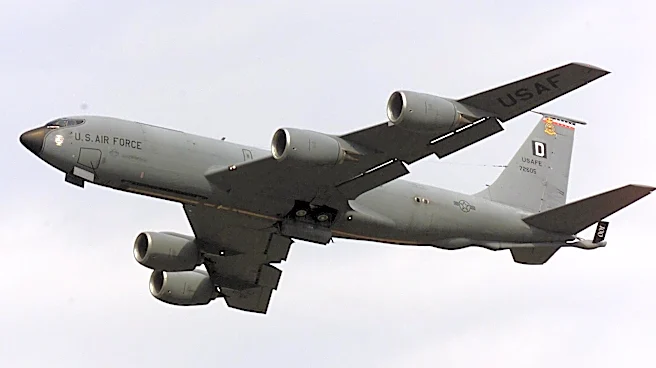
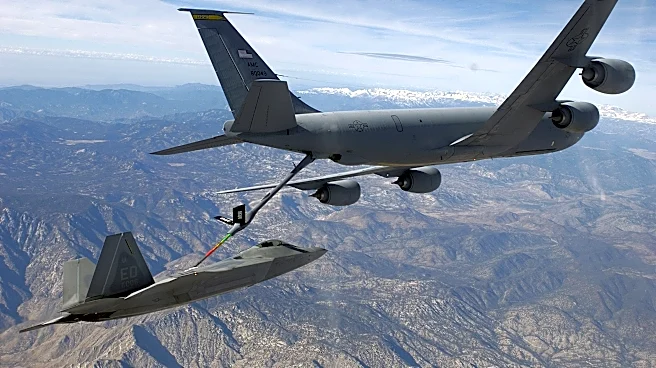
The U.S. Air Force has evacuated air refueling tankers from RAF Mildenhall, a base in eastern England, following a threat from Iran, as reported by the Wall Street Journal. On Monday, two tankers were diverted to Germany, and several others were relocated
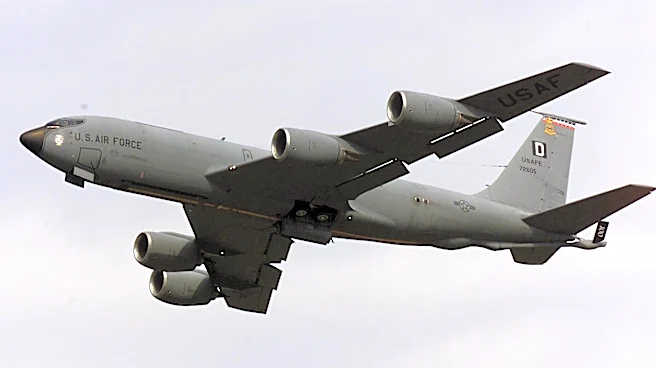
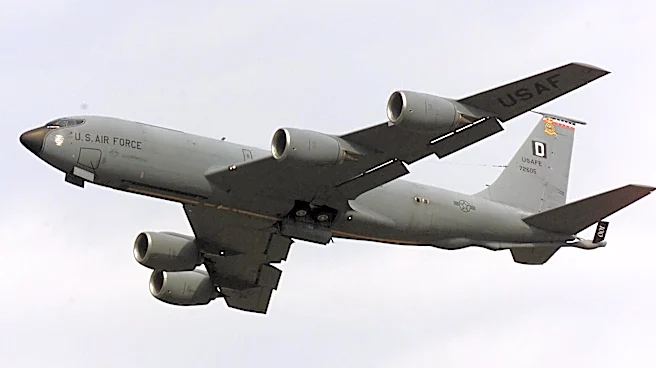
to different European bases later the same day. U.S. officials made the decision to redeploy the aircraft after receiving alerts about a new threat. RAF Mildenhall hosts the 100th refueling wing, which is the sole permanent refueling wing in the European region and operates KC-135 Stratotankers. A European Command official acknowledged awareness of the reports but stated that aircraft rotations occur for various reasons, including training and operational requirements, without providing specific details due to operational security. The U.S. military maintains that its aircraft are hosted in accordance with agreements with allies and partners.
Why It's Important?
This evacuation underscores heightened tensions and potential threats involving Iran, impacting U.S. military operations in Europe. The redeployment of critical air refueling assets suggests a credible and immediate security concern, necessitating proactive measures to protect personnel and equipment. The 100th refueling wing at RAF Mildenhall is vital for projecting U.S. air power across Europe and beyond, making any disruption to its operations significant for regional stability and U.S. strategic capabilities. This incident follows a previous withdrawal of U.S. bombers from RAF Fairford less than two months prior, amidst investigations into a suspected terror plot linked to Iran. The repeated need to relocate assets due to perceived threats highlights the ongoing security challenges faced by U.S. forces in the region and the potential for broader geopolitical implications.
What's Next?
The U.S. Air Force will likely continue to monitor intelligence regarding threats from Iran and adjust its force posture in Europe as deemed necessary for operational security. While specific details on the duration of the tankers' relocation or their eventual return to RAF Mildenhall remain undisclosed, the U.S. military will prioritize the safety of its assets and personnel. This event may lead to increased vigilance at other U.S. military installations in Europe and potentially influence future strategic deployments and security protocols. Diplomatic and intelligence efforts will likely intensify to assess the nature and credibility of the threats, potentially leading to further adjustments in U.S. foreign policy or military readiness in the region. The incident also puts pressure on allied nations to enhance their own security measures and intelligence sharing.
Beyond the Headlines
The evacuation of U.S. air assets from a key European base due to an Iranian threat points to a complex and evolving geopolitical landscape. It highlights the persistent shadow of state-sponsored threats and the challenges of maintaining military readiness in an environment of asymmetric warfare and potential terrorism. This situation could also strain diplomatic relations, as host nations like the UK must balance their sovereign interests with supporting U.S. military operations. The incident serves as a stark reminder of the interconnectedness of global security, where regional conflicts can have far-reaching implications for military deployments and international alliances. It also raises questions about the long-term security of U.S. bases abroad and the need for adaptable defense strategies in response to dynamic threat assessments.