
What's Happening?
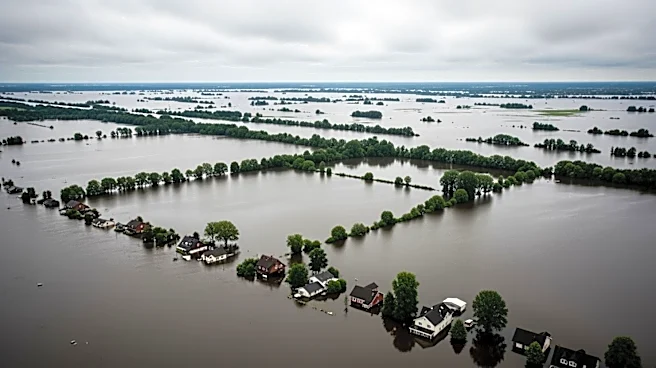
Severe flooding is impacting several U.S. states, particularly in the Midwest and South, due to heavy rainfall and severe storms. Tennessee and Alabama are experiencing significant flooding, with up to 9
inches of rain causing flash flood emergencies. In Huntsville, Alabama, vehicles were partially submerged, leaving drivers stranded. Texas and Louisiana have also been affected, with torrential downpours leading to road closures and water rescues. The National Weather Service has issued flood watches for large areas, including Missouri, Illinois, and parts of Georgia, affecting approximately 20 million people. The storms are expected to continue, with potential for large hail, severe wind gusts, and tornadoes.
Why It's Important?
The flooding poses significant risks to public safety and infrastructure, potentially leading to property damage and disruptions in transportation. The affected regions are facing life-threatening conditions, with emergency services stretched thin due to the need for water rescues and road closures. The economic impact could be substantial, affecting local businesses and agriculture. Additionally, the severe weather highlights the increasing frequency and intensity of such events, possibly linked to broader climate patterns. This situation underscores the need for improved disaster preparedness and infrastructure resilience in vulnerable areas.
What's Next?
As the storms continue, emergency services are on high alert, and residents in affected areas are advised to stay informed and take necessary precautions. The National Weather Service will continue to monitor the situation and update advisories as needed. Local governments may need to implement additional measures to protect communities and manage resources effectively. Long-term, there may be discussions on enhancing flood defenses and revising urban planning to mitigate future risks.