



What's Happening?
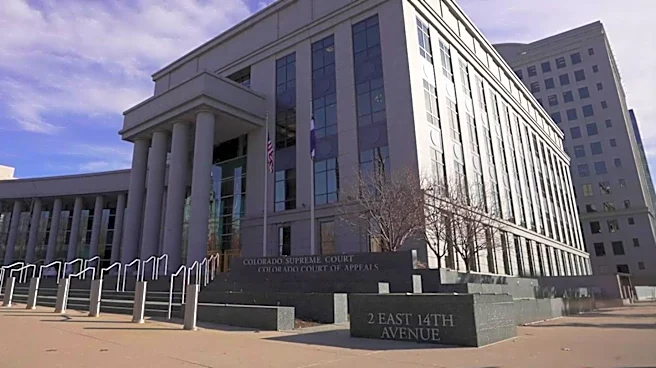
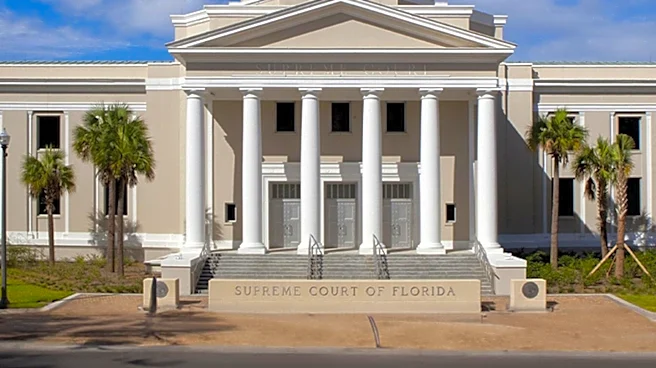
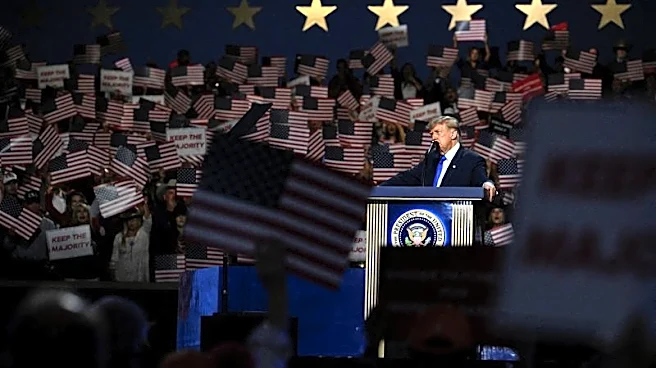
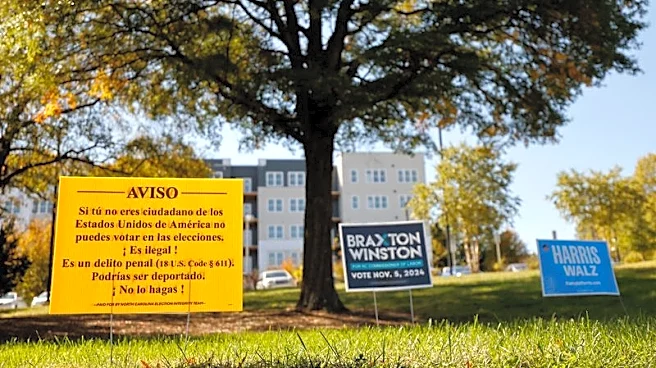
The Supreme Court has temporarily lifted restrictions on a federal voter eligibility database, known as the Systematic Alien Verification for Entitlements (SAVE) program, ahead of upcoming elections. This decision grants a temporary victory to President
Trump's administration in its efforts to combat noncitizen voting. The emergency order allows states to utilize the revamped Department of Homeland Security (DHS) program to verify the eligibility of voters on their rolls. The SAVE program has faced scrutiny due to concerns about its use of sensitive personal data and its potential to incorrectly flag eligible voters as noncitizens. A federal judge had previously blocked the use of the tool, citing violations of Americans' privacy rights and the risk of wrongful voter removals. However, the Supreme Court majority found that a 1996 law permits DHS to obtain citizenship and immigration information from other federal agencies and obligates the federal government to respond to states seeking citizenship verification. The court's three liberal-leaning justices dissented from the decision, with Justice Ketanji Brown Jackson highlighting the risks of mistakenly revoking legitimate voter registrations.
Why It's Important?
This Supreme Court ruling has significant implications for election integrity and voter rights in the U.S. The ability for states to use the SAVE database, even voluntarily, could lead to increased efforts to identify and potentially remove noncitizens from voter rolls. While proponents argue this is crucial for ensuring only eligible citizens vote, critics fear that the program's known inaccuracies could disenfranchise lawful voters. Past instances, such as in Travis County, Texas, where a significant percentage of flagged individuals were found to be U.S. citizens, underscore these concerns. The decision also highlights the ongoing tension between federal and state authority over election rules, as the Constitution primarily grants states and Congress the power to set these regulations, not the president. The ruling could influence voter turnout and the composition of the electorate in future elections, particularly in states that choose to utilize the database, by potentially creating additional hurdles for some voters.
What's Next?
The Supreme Court's decision is an emergency order, meaning the legal battle over the SAVE database is likely to continue. Plaintiffs in the case have vowed to do everything in their power to ensure the district court's original decision, which blocked the program, stands. While states' use of the SAVE program is voluntary, the ruling could encourage more states to adopt it, especially those aligned with the Trump administration's stance on noncitizen voting. However, existing laws generally prevent states from systematically purging voters within 90 days of an election, which may limit the immediate impact on the upcoming midterms. Election administrators are advised to use the SAVE program as a starting point for verification, rather than a definitive indicator of citizenship, given its history of inaccuracies. The debate surrounding voter eligibility and the tools used to verify it is expected to remain a prominent issue in U.S. politics, with potential legislative actions or further legal challenges on the horizon.
Beyond the Headlines
The controversy surrounding the SAVE database extends beyond immediate election concerns, touching upon fundamental questions of privacy, data accuracy, and the balance of power in election administration. The program's reliance on sensitive personal data raises privacy concerns for all registered voters, not just those potentially flagged as noncitizens. The documented instances of the SAVE program wrongly flagging U.S. citizens highlight the ethical dilemma of using imperfect tools that could lead to the disenfranchisement of eligible voters. This situation also underscores the broader political polarization around election security, where efforts to prevent voter fraud are often viewed through partisan lenses, with Republicans generally advocating for stricter measures and Democrats emphasizing voter access. The long-term implications could include a shift in how voter rolls are maintained nationwide, potentially leading to more stringent verification processes that could disproportionately affect certain demographics or those with complex citizenship documentation histories. The ongoing legal and political battles reflect a deeper societal debate about trust in electoral systems and the mechanisms designed to safeguard them.