






What's Happening?
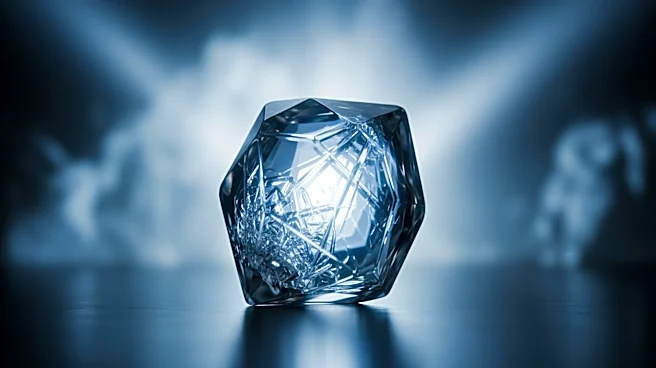
During the Trinity nuclear test in 1945, a new material was inadvertently created, as recently discovered by an international research team led by geologist Luca Bindi. This material, a type I clathrate composed of calcium, copper, and silicon, was found
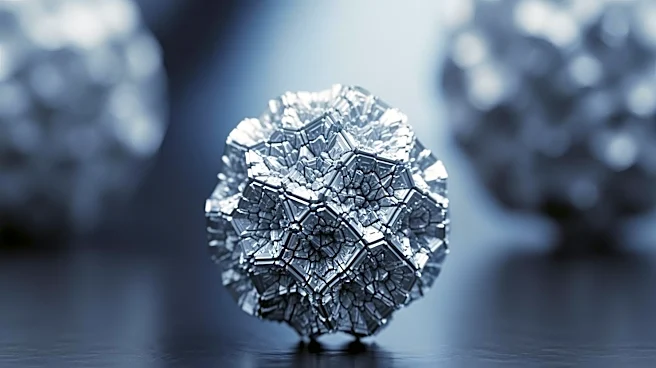
in trinitite, a glassy residue from the explosion. Clathrates are known for their cage-like structures that trap atoms, offering unique properties useful in energy conversion and semiconductor development. The discovery highlights the potential of extreme conditions, such as those in nuclear explosions, to produce materials not achievable through conventional methods.
Why It's Important?
The identification of this new material underscores the potential for scientific advancements arising from extreme events. Clathrates have significant technological applications, including in the fields of energy and materials science. This discovery could lead to innovations in thermoelectric materials and semiconductors, impacting industries reliant on energy efficiency and advanced electronics. Furthermore, understanding how materials form under such conditions can inform future research and development, potentially leading to breakthroughs in material science and engineering.
What's Next?
The research team plans to further investigate the properties and potential applications of the newly discovered clathrate. This could involve exploring its use in energy technologies and electronics, as well as understanding its formation process. The findings may prompt additional studies into other materials formed under extreme conditions, such as those resulting from meteor impacts or lightning strikes. These efforts could expand the range of materials available for technological innovation, offering new solutions to contemporary challenges in energy and materials science.