






What's Happening?
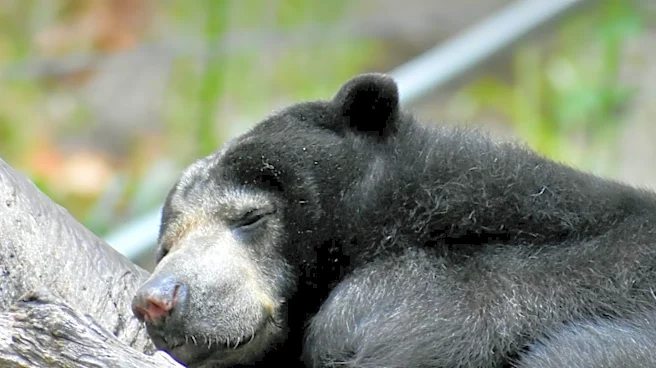
Researchers in Connecticut are conducting a scientific survey to estimate the state's black bear population, the first such study in over a decade. The project, a collaboration between the state Department of Energy and Environmental Protection and Mississippi
State University's Carnivore and Population Ecology Lab, involves collecting hair samples from barbed wire traps across western Connecticut. These samples will be used to identify individual bears through DNA analysis, allowing researchers to estimate the population size and distribution.
Why It's Important?
Understanding the bear population in Connecticut is crucial for effective wildlife management and conservation strategies. As bear encounters with humans increase, accurate population data can help inform policies to mitigate conflicts and ensure the safety of both bears and residents. The study's findings could influence decisions on potential bear hunting regulations and other management practices. Additionally, the research contributes to broader ecological knowledge and conservation efforts in the region.
What's Next?
The fieldwork for the bear population survey is set to conclude later this month, with genetic testing of the samples to follow. Researchers expect to have a final population estimate by next spring. The results will be used to guide future conservation and management strategies in Connecticut. Ongoing monitoring and potential policy changes may be considered based on the study's findings, particularly in areas with high human-bear interactions.