






What's Happening?
Nell 'Mickey' Stevenson Bright, the sole surviving member of the Women Airforce Service Pilots (WASP), is slated for induction into the International Air & Space Hall of Fame. The ceremony will take place on November 21 at the San Diego Air & Space Museum.
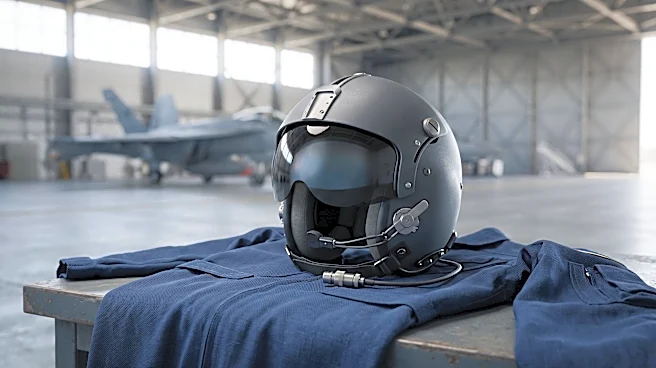
Bright, who is 105 years old, was part of the WASP program established during World War II to support military operations by utilizing women pilots in noncombatant roles, thereby freeing male pilots for combat. She was one of 1,074 women who completed the rigorous training, out of 1,830 applicants. Bright's extensive service included flying B-25 bombers and P-47s, towing targets for gunnery practice, and conducting night missions for searchlight crew training. Despite wearing military uniforms and adhering to military rules, WASP members were classified as civilians and initially received no veterans' benefits or separation pay.
Why It's Important?
The induction of Nell 'Mickey' Stevenson Bright into the International Air & Space Hall of Fame is a significant recognition of the pioneering contributions of the WASP program and women in aviation. This event highlights a crucial, yet often overlooked, chapter in U.S. military history, where women played a vital role in the war effort. Their initial classification as civilians, despite their hazardous duties, underscores historical inequities that were later rectified when President Jimmy Carter signed the GI Bill Improvement Act of 1977, granting WASP members retroactive military veteran status. Bright's story serves as an inspiration, demonstrating resilience and breaking gender barriers in a male-dominated field. Her recognition helps to ensure that the legacy of the WASP and their sacrifices are properly honored and remembered by future generations.
What's Next?
The induction ceremony on November 21 will formally enshrine Nell 'Mickey' Stevenson Bright's legacy within the International Air & Space Hall of Fame. This event will likely draw attention to the history of the WASP and the broader contributions of women in military and aviation roles. Educational institutions and historical organizations may use this opportunity to further promote awareness of the WASP program. The recognition could also inspire ongoing efforts to document and preserve the stories of other unsung heroes from World War II. For the public, it offers a chance to reflect on the evolution of gender roles in the military and the importance of acknowledging historical service.
Beyond the Headlines
Nell 'Mickey' Stevenson Bright's journey from a young girl captivated by flight to a pioneering military pilot and later a successful stockbroker, illustrates a profound narrative of determination and adaptability. Her experience as a WASP member, facing both the dangers of wartime flying and the societal limitations placed on women, highlights the deep-seated gender biases of the era. The initial lack of veteran benefits for WASP members, despite their critical service, reflects a historical oversight that took decades to correct, underscoring the persistent struggle for equal recognition. Her induction is not just about honoring an individual; it's about rectifying historical injustices and celebrating the enduring spirit of women who defied expectations and paved the way for future generations in aviation and beyond. Her humorous remark that 'it's important to know that women can do more than cook' encapsulates the broader cultural shift she helped to embody.