






What's Happening?
General Atomics Electromagnetic Systems (GA-EMS) has been awarded a subcontract to produce critical components for the U.S. Army's Dark Eagle Long-Range Hypersonic Weapon (LRHW) and the Navy's Conventional Prompt Strike (CPS) program. This agreement,
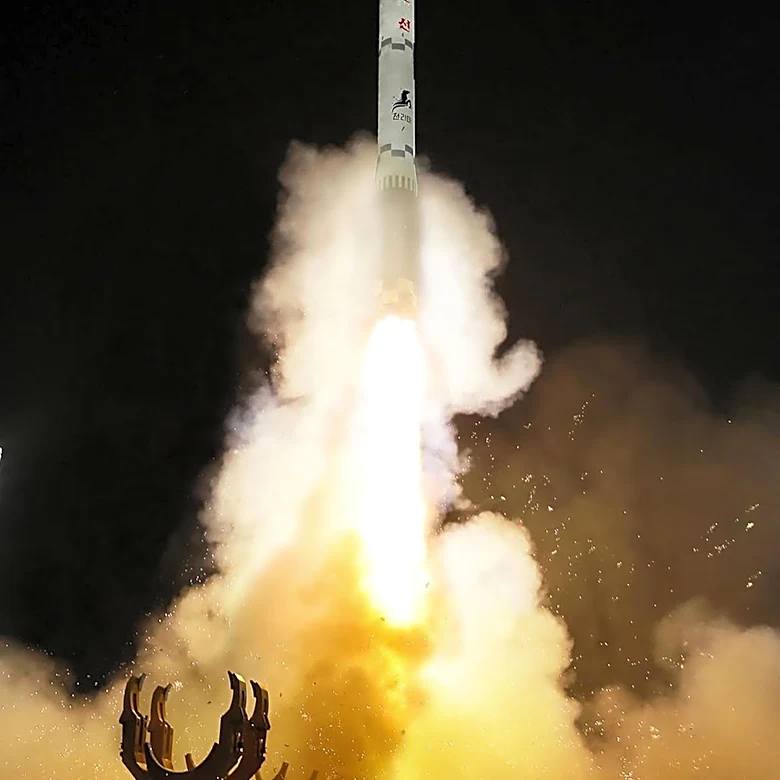
announced on November 4, 2026, supports the transition of these hypersonic missiles towards sustained production. The subcontract, part of a larger $2.7 billion U.S. Army contract awarded to Leidos in May 2026, covers precision-machined metal parts, structural components, and electrical cable assemblies for the Common Hypersonic Glide Body (C-HGB). The C-HGB is a maneuvering vehicle shared by both Army and Navy programs, utilizing a common missile architecture adapted for ground-based and maritime launch platforms. This aims to reduce duplication in the development of long-range strike capabilities. The Navy plans to integrate CPS onto three Zumwalt-class destroyers and later on Virginia-class nuclear-powered attack submarines equipped with Virginia Payload Modules.
Why It's Important?
This contract is crucial for the United States' efforts to strengthen its long-range strike capabilities, particularly in response to evolving military challenges in the Indo-Pacific. Hypersonic weapons, capable of traveling at speeds exceeding Mach 5 with maneuverability, pose significant challenges to existing missile defense systems, offering a strategic advantage. By expanding industrial capacity for these components, the U.S. aims to overcome production bottlenecks that have hindered the rapid deployment of these advanced weapons. The common missile architecture for both Army and Navy programs is a significant step towards efficiency and interoperability, ensuring that both services can deploy these critical assets more effectively. The successful production and integration of these missiles are vital for enhancing U.S. deterrence and response options against heavily defended targets at considerable distances.
What's Next?
General Atomics will continue manufacturing components through 2031, supporting the ongoing development and production of the Dark Eagle and Conventional Prompt Strike missiles. However, significant industrial challenges remain. A July 2026 Government Accountability Office report indicated that Lockheed Martin's CPS missile production facility could only produce a maximum of six to seven rounds annually, falling short of the twelve required for stable production. The report also identified a 24-month delay in the modernization of Zumwalt-class destroyers, with the first CPS flight test from a destroyer now anticipated in 2027. These setbacks highlight that while component supply is being addressed, increasing overall missile output and successful platform integration are critical next steps. The U.S. Army's Dark Eagle has a reported range of approximately 2,775 kilometers, and its deployment to Australia during Exercise Talisman Sabre demonstrated its transportability, although no missile launch was reported.
Beyond the Headlines
The push for hypersonic weapons reflects a broader strategic shift in military doctrine, emphasizing speed and maneuverability to overcome advanced defenses. The challenges in scaling up production, as highlighted by the GAO report, underscore the complexities of developing and fielding cutting-edge military technology. These issues are not merely technical but also involve industrial base capacity, workforce development, and supply chain resilience. The integration of these weapons onto diverse platforms, from ground launchers to submarines, signifies a comprehensive approach to projecting power across multiple domains. The long-term implications include a potential arms race in hypersonic technology, influencing global security dynamics and requiring continuous innovation and investment to maintain a technological edge. The ability to sustain a sufficient inventory of these missiles will be a key factor in their strategic impact.