






What's Happening?
The Colorado Parks and Wildlife Commission is scheduled to consider a proposal on November 4 in Fort Morgan, Colorado, to ban recreational prairie dog shooting on public lands. This initiative is being pushed by conservation groups, including the Prairie
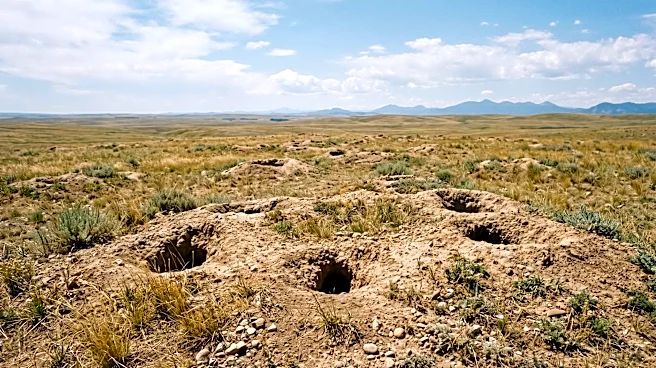
Dog Coalition and Defenders of Wildlife, who argue that prairie dogs are crucial for healthy grassland ecosystems. Conversely, ranchers and hunting guides from Wyoming and South Dakota are opposing the ban, asserting that unchecked prairie dog populations destroy forage, spread noxious weeds, and pose health risks to livestock and riders due to their burrows. Jim Magagna, executive vice president of the Wyoming Stock Growers Association, stated that ranchers rely on shooters to manage prairie dog numbers. Retired University of Wyoming veterinary pathologist Donal O’Toole supports the ban, citing concerns about lead poisoning in raptors from bullet fragments and the prairie dog's role as a keystone species, particularly for the endangered black-footed ferret.
Why It's Important?
This debate highlights a significant conflict between agricultural interests, recreational hunting, and wildlife conservation in the Western United States. A ban on prairie dog shooting in Colorado could set a precedent for other states, particularly those with intertwined public and private lands like Wyoming, where ranchers depend on hunters to control prairie dog populations. The outcome will impact land management practices, potentially altering the ecological balance of grasslands and affecting the livelihoods of ranchers who face forage destruction and safety hazards from prairie dog colonies. Furthermore, the discussion brings to the forefront the broader issue of lead ammunition's environmental impact and its potential harm to scavenger species, as well as the conservation efforts for species like the black-footed ferret, which are highly dependent on prairie dog populations for survival.
What's Next?
The Colorado Parks and Wildlife Commission will hold a meeting on November 4 in Fort Morgan to consider the proposed ban. The decision made by the commission will determine the future of recreational prairie dog shooting on public lands in Colorado. If the ban is enacted, it could lead to increased prairie dog populations on public lands, potentially exacerbating issues for adjacent private landowners and ranchers. Conversely, if the ban is rejected, conservation groups may continue to advocate for stricter regulations or alternative management strategies. The outcome will likely influence policy discussions in neighboring states regarding wildlife management, public land use, and the balance between economic activities and ecological preservation.
Beyond the Headlines
The controversy surrounding prairie dog hunting extends beyond immediate land management to deeper ethical and ecological considerations. The debate touches on the definition of 'sport hunting' versus 'pest control,' with some critics viewing recreational shooting of prairie dogs as unethical. Ecologically, prairie dogs are considered a keystone species, meaning their presence significantly impacts the structure and function of their ecosystem, supporting a diverse array of other species through their burrows and as a food source. The potential ban also raises questions about the role of public lands and how they should be managed to serve multiple, often conflicting, interests—from recreation and agriculture to biodiversity conservation. The long-term implications could include shifts in grassland biodiversity, changes in ranching practices, and ongoing legal and political battles over wildlife management policies.