


What's Happening?
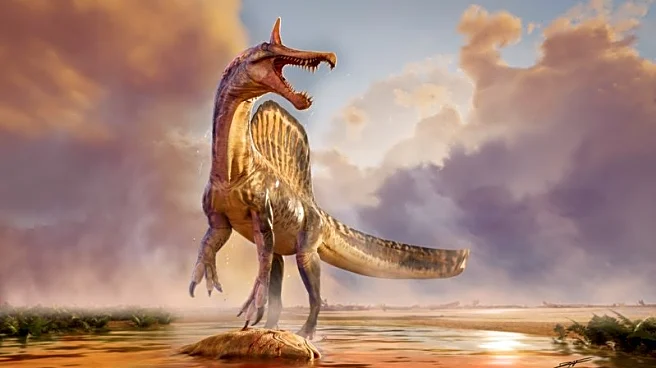
Recent fossil discoveries in Niger have provided new insights into the lifestyle of spinosaurs, a group of dinosaurs known for their distinctive sail-backed appearance. The fossils, identified as a new species named Spinosaurus mirabilis, suggest that
these dinosaurs were more akin to wading birds like herons rather than aquatic hunters. The research, led by Paul Sereno from the University of Chicago, indicates that the spinosaurs had features such as a large crest and sail, which were likely used for visual display rather than swimming. The fossils were found far inland, supporting the theory that these dinosaurs hunted along rivers and needed to defend territories, similar to modern wading birds.
Why It's Important?
This discovery challenges previous depictions of spinosaurs as aquatic predators and provides a clearer understanding of their ecological role. By establishing that spinosaurs were waders, the research reshapes our understanding of dinosaur behavior and adaptation. This has implications for paleontological theories about dinosaur evolution and their environmental interactions. The findings also highlight the importance of visual displays in dinosaur species, suggesting complex social behaviors. This could influence future studies on dinosaur ecology and the evolutionary pressures that shaped their development.
What's Next?
The research team plans to continue studying the newly discovered fossils to further understand the anatomy and behavior of spinosaurs. Future expeditions may focus on uncovering more specimens to confirm these findings and explore other regions where spinosaurs might have lived. Additionally, the study may prompt a reevaluation of other dinosaur species previously thought to be aquatic, potentially leading to new insights into dinosaur evolution and adaptation.