
What's Happening?
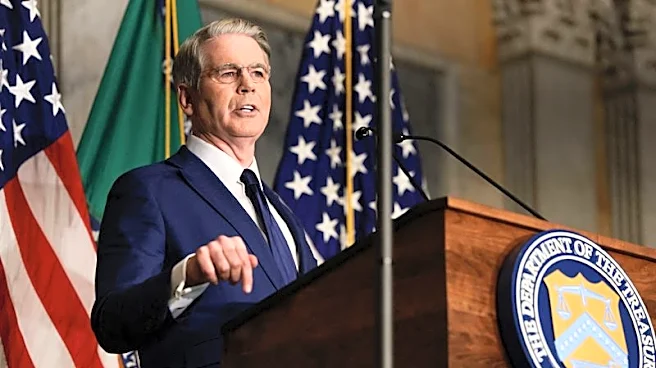
The Trump administration is preparing to escalate economic pressure on Iran, with Treasury Secretary Scott Bessent indicating that unprecedented measures will be announced soon. Since President Trump began his second term, the U.S. Treasury Department's
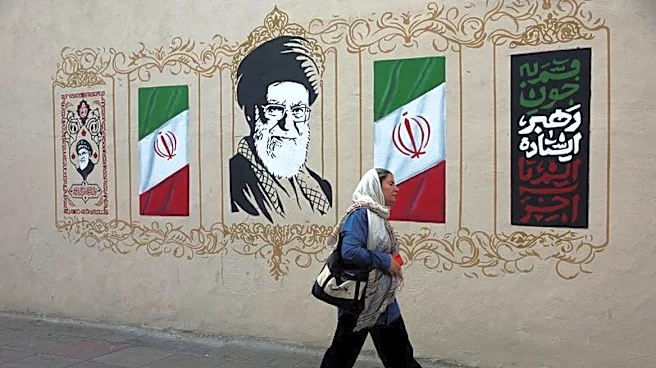
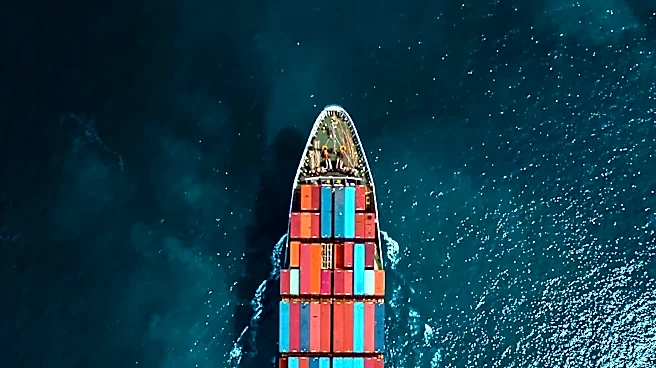
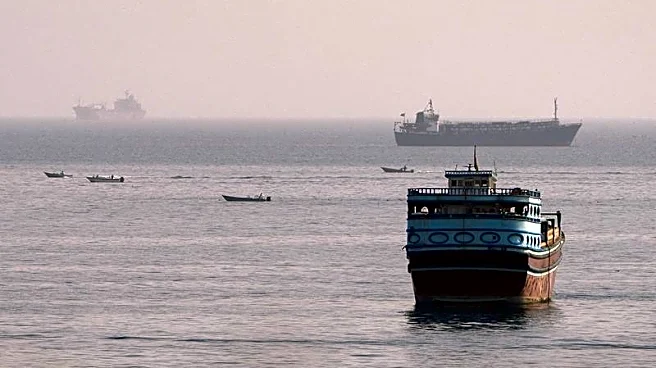
Office of Foreign Assets Control (OFAC) has sanctioned over 1,000 individuals, vessels, and aircraft. Recent actions have targeted Iran's shadow oil fleet, shipping insurers, entities involved in weapons acquisition, and digital exchanges, leading to an estimated $500 billion freeze in Iran-linked cryptocurrency. These efforts come as Iran's economy is already strained by existing sanctions and a naval blockade in the Strait of Hormuz, where oil shipments are at a virtual standstill. Iran has condemned these impending sanctions, which are expected to further impact its economy.
Why It's Important?
The potential for increased U.S. sanctions on Iran carries significant implications for global energy markets and international relations. Targeting Chinese 'teapot' refineries, which process over 80% of Iran's shipped oil, could disrupt a major revenue stream for Tehran, but also risks retaliatory actions from Beijing. The Treasury Department has already warned two larger Chinese banks about potential secondary sanctions if they facilitate Iranian funds, a move that could have a chilling effect on major financial institutions worldwide. Furthermore, the U.S. strategy of targeting individuals and entities helping Iran evade sanctions, while effective in some instances, has been described as a 'whack-a-mole' approach, suggesting the need for more comprehensive solutions. The broader impact on U.S. foreign policy involves balancing pressure on Iran with maintaining stable relations with key economic partners like China, especially given concerns about critical mineral exports essential for advanced technology.
What's Next?
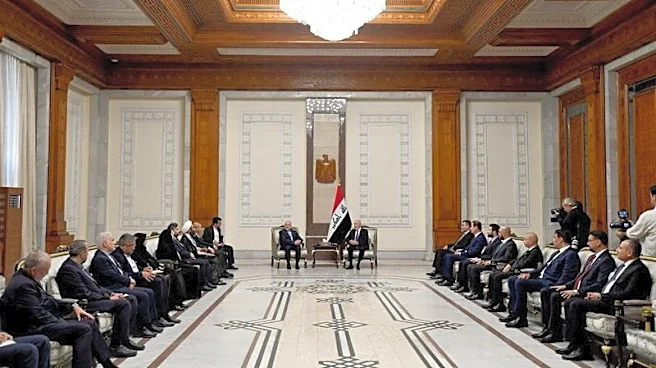
Treasury Secretary Scott Bessent is scheduled to hold a press conference on Monday to detail the new measures. The Trump administration may explore additional options, including further aviation sanctions to degrade Iran's trade capabilities, especially following the U.S. blockade of the Strait of Hormuz. The possibility of a land blockade, requiring cooperation from Iran's neighbors such as Iraq, Turkey, and Pakistan, is also being considered, though its execution would be challenging. Another potential action involves imposing tariffs on goods from countries that continue to do business with Iran, a strategy that could be bolstered by new tariff powers granted to President Trump through a recently passed Senate bill on Russia sanctions. These actions are expected to intensify economic pressure on Iran, potentially leading to further instability in the region and complex diplomatic challenges.
Beyond the Headlines
The escalating economic pressure on Iran raises deeper questions about the effectiveness and ethical implications of broad sanctions. While intended to curb Iran's nuclear program and support for militant groups, such measures can disproportionately affect the Iranian populace, potentially leading to humanitarian concerns. The 'whack-a-mole' nature of targeting new entities that emerge to facilitate Iran's trade highlights the adaptive capacity of sanctioned regimes and the continuous challenge of enforcement. The consideration of a land blockade, which could severely impact the import of essential goods like food and textiles, underscores the potential for significant humanitarian consequences and the ethical dilemmas inherent in such strategies. The long-term efficacy of these sanctions in altering Iran's behavior versus fostering resentment and instability remains a critical, underlying concern.