





What's Happening?
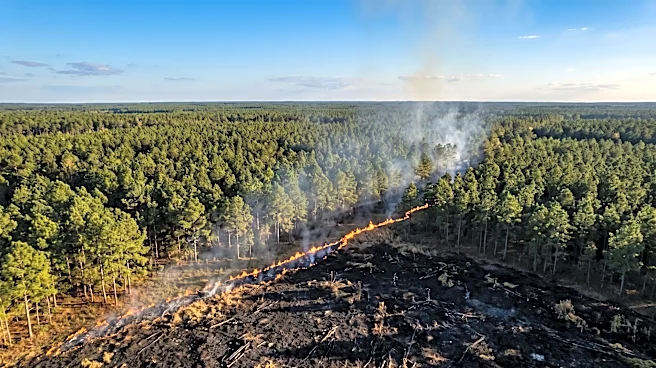
The Forest Service is actively assisting with two wildfires in Gogebic County, Michigan. The first, named the Black River Fire, is located south of Wakefield, east of County Road 519, and has consumed 85 acres. The second incident, the Camp 4 fire, is situated
north of Wakefield off Camp 4 Grade Road and has burned 10 acres. This particular fire is described as wind-driven and is affecting hardwood areas. In response to these blazes, the Forest Service has deployed aircraft to drop water on the affected regions. Authorities are also issuing a public reminder that drones are strictly prohibited in fire zones, as their presence can disrupt firefighting operations and endanger personnel.
Why It's Important?
The occurrence of these wildfires in Gogebic County highlights the ongoing threat of such events to natural landscapes and communities in Michigan. The involvement of the Forest Service underscores the severity and potential for rapid spread, especially with the Camp 4 fire being wind-driven. The prohibition of drones in fire zones is a critical safety measure, emphasizing the dangers posed to aerial firefighting efforts and ground crews when unauthorized aircraft are present. These incidents can lead to significant ecological damage, loss of timber resources, and potential threats to human life and property, necessitating a coordinated and efficient response from fire management agencies.
What's Next?
Firefighting efforts will continue with the deployment of aircraft to contain and extinguish the Black River and Camp 4 fires. The Forest Service will likely maintain a strong presence in the area, monitoring conditions and working to prevent further spread. Public advisories regarding drone usage in fire zones are expected to persist, with potential enforcement actions for non-compliance to ensure the safety of emergency responders. Investigations into the causes of these fires may also be initiated to inform future prevention strategies and public awareness campaigns.
Beyond the Headlines
These wildfires in Michigan contribute to a broader national concern regarding increased wildfire activity, often exacerbated by climate conditions and human factors. The emphasis on drone prohibition in fire zones reflects a growing challenge for emergency services, as recreational drone use can inadvertently interfere with critical operations. Beyond immediate containment, these events prompt discussions about long-term forest management practices, public education on fire prevention, and the allocation of resources for wildfire response and mitigation in vulnerable regions. The impact on local ecosystems, air quality, and the economic activities reliant on forest health will also be a significant consideration.