
What's Happening?
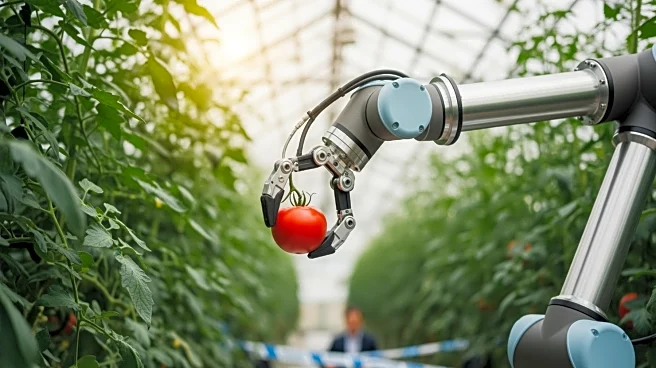
Osaka Metropolitan University has developed a new method for agricultural robots to assess the ease of harvesting tomatoes. This innovation, led by Assistant Professor Takuya Fujinaga, aims to address
labor shortages in agriculture by enabling robots to make informed decisions about which tomatoes to pick. The system uses image recognition and statistical analysis to evaluate factors such as fruit visibility and stem shape, allowing robots to adjust their approach for a successful harvest. In trials, the system achieved an 81% success rate, indicating significant potential for improving robotic harvesting efficiency.
Why It's Important?
The development of intelligent agricultural robots could significantly impact the U.S. agricultural sector by addressing labor shortages and increasing efficiency. By automating the harvesting process, these robots can reduce the reliance on human labor, potentially lowering costs and increasing productivity. This technology also supports the trend towards precision agriculture, where data-driven decisions enhance crop management. As the U.S. faces challenges in agricultural labor supply, innovations like these could help maintain competitiveness in the global market.
What's Next?
Future developments may focus on expanding the capabilities of these robots to handle a wider variety of crops and further improve their decision-making algorithms. Collaboration between universities and agricultural companies could accelerate the adoption of this technology. Additionally, regulatory considerations and industry standards will need to be addressed to ensure the safe and effective deployment of robotic systems in agriculture.