



What's Happening?
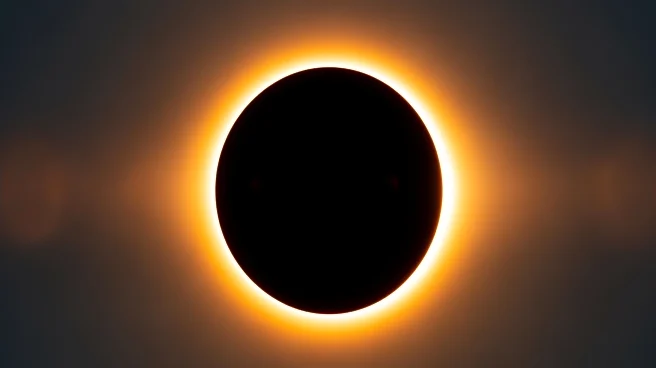
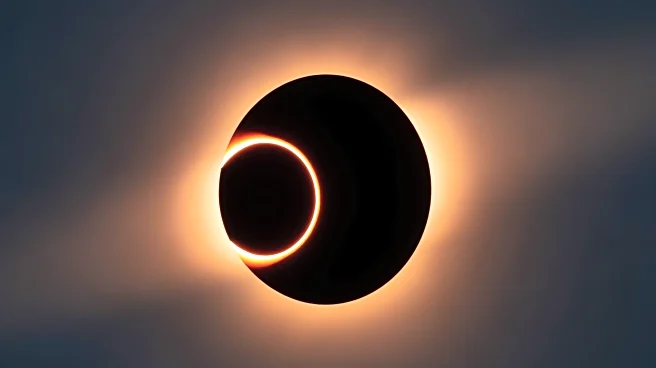
An annular solar eclipse is set to occur on February 17, 2026, transforming the sun into a 'ring of fire' as the moon passes between Earth and the sun. This phenomenon occurs when the moon is too far from Earth to completely cover the sun, leaving a bright
outer ring visible. The eclipse will last up to 2 minutes and 20 seconds at its peak. The path of annularity, where the full effect can be seen, will be limited to a small region in Antarctica, while other areas in southern Africa and southernmost South America will experience a partial eclipse.
Why It's Important?
The annular solar eclipse is a significant astronomical event that draws attention from both scientists and the general public. It provides a unique opportunity for educational outreach and public engagement in astronomy. The event highlights the importance of safe viewing practices, as looking directly at the sun can cause eye damage. The eclipse also serves as a reminder of the intricate dynamics of celestial bodies and their impact on Earth.
What's Next?
After the annular solar eclipse, the next major solar event will be a total solar eclipse on August 12, 2026, visible from parts of Greenland, Iceland, and northern Spain. These events continue to offer opportunities for scientific study and public interest in space phenomena.