








What's Happening?
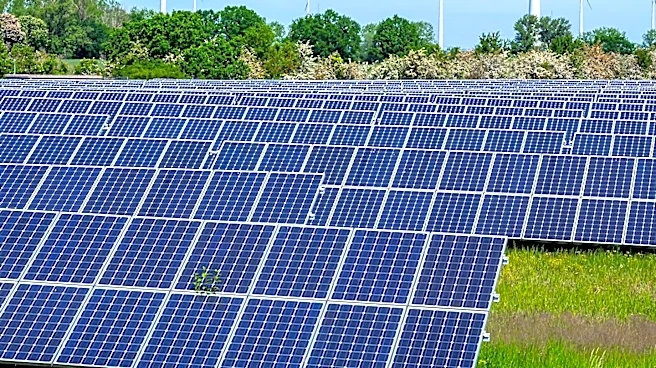
The European Union has experienced a significant increase in solar energy production, with solar power becoming the top source of electricity in May and June, providing a record-high 25% of the region's power. This surge in solar energy is part of a broader
trend of rapid solar adoption across Europe, driven by the destabilization of the region's gas-dependent electricity system following Russia's invasion of Ukraine in 2022. The recent conflict in Iran and the resulting spike in fossil fuel prices are expected to further accelerate the EU's investment in renewables. EU energy chief Dan Jørgensen has announced a new Electrification Action Plan to double the current rate of electrification, signaling a strong commitment to clean energy.
Why It's Important?
The EU's shift towards solar energy and other renewables is a critical step in reducing reliance on fossil fuels and mitigating climate change. This transition not only helps decrease carbon emissions but also enhances energy security by reducing dependence on imported fossil fuels. The move towards renewables is likely to stimulate economic growth in the clean energy sector, creating jobs and fostering innovation. Additionally, the EU's actions could serve as a model for other regions, demonstrating the feasibility and benefits of transitioning to a sustainable energy system. The increased investment in solar energy also reflects a strategic response to geopolitical tensions and fluctuating fossil fuel prices, highlighting the importance of energy independence.