





What's Happening?
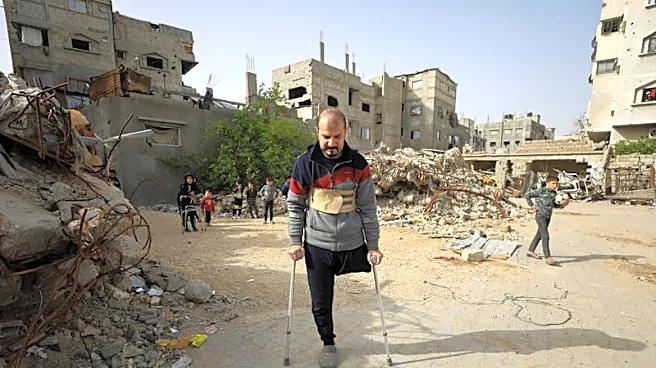
Six months after a ceasefire was declared in Gaza, residents report that the anticipated recovery and aid have yet to materialize. The ceasefire, which was expected to bring an end to the conflict and initiate a significant influx of aid, has not led
to the improvements many had hoped for. NPR’s Anas Baba highlights the ongoing struggles faced by the people in Gaza, who continue to wait for the promised aid and recovery efforts to take effect. Despite the ceasefire, the region remains in a state of limbo, with little progress visible on the ground.
Why It's Important?
The situation in Gaza is critical as it underscores the challenges of post-conflict recovery in regions affected by prolonged violence. The lack of tangible progress despite a ceasefire agreement highlights the complexities involved in delivering aid and rebuilding infrastructure in conflict zones. This has significant implications for international aid organizations and governments involved in the peace process, as it raises questions about the effectiveness of current strategies and the need for more robust mechanisms to ensure aid reaches those in need. The ongoing struggles in Gaza also have broader geopolitical implications, affecting regional stability and international relations.
What's Next?
The future of Gaza's recovery efforts remains uncertain. Stakeholders, including international aid organizations and governments, may need to reassess their strategies to ensure that aid is effectively delivered and utilized. There may be increased pressure on these entities to demonstrate tangible progress in improving living conditions in Gaza. Additionally, the situation could prompt further diplomatic efforts to address the underlying issues that have hindered recovery, potentially involving negotiations for more comprehensive peace agreements or international interventions to facilitate aid distribution.