


What's Happening?
A new study led by Professor Sara Walker from Arizona State University proposes a novel method for detecting life on exoplanets by focusing on molecular complexity rather than specific biosignature gases. Traditional methods rely on detecting gases like
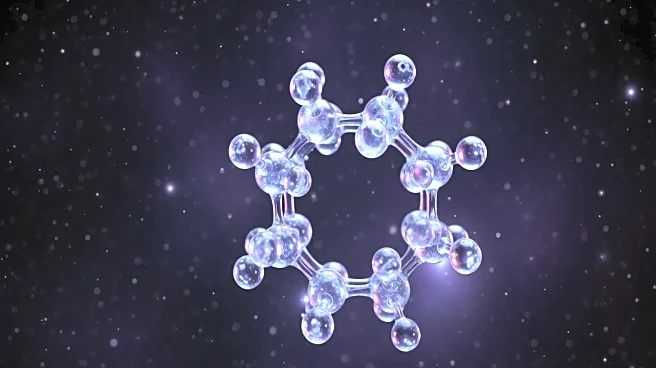
oxygen, methane, and ozone, which are associated with biological processes on Earth. However, this approach may overlook life forms with different biochemistries. The new method uses assembly theory to assign an Assembly Index to molecules, indicating the complexity of their formation. Molecules with high complexity suggest the presence of life, as they are unlikely to form randomly. This approach is agnostic to the specific nature of life, allowing for the detection of life forms that differ from those on Earth. The study aims to apply this method using NASA's upcoming Habitable Worlds Observatory, which will search for signs of life on Earth-like planets.
Why It's Important?
This new approach to detecting extraterrestrial life could revolutionize the search for life beyond Earth by expanding the criteria used to identify potential biosignatures. By focusing on molecular complexity, scientists can potentially identify life forms that do not rely on Earth-like biochemistry. This method could provide a more comprehensive understanding of the diversity of life in the universe and challenge the Earth-centric view of life detection. The ability to detect life forms with different biochemistries could have profound implications for astrobiology and our understanding of life's potential in the universe.