



What's Happening?
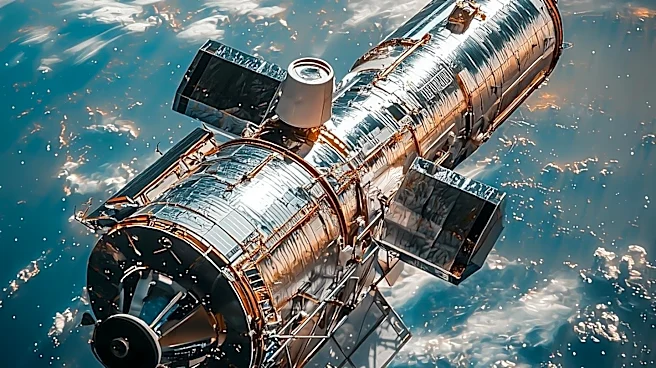
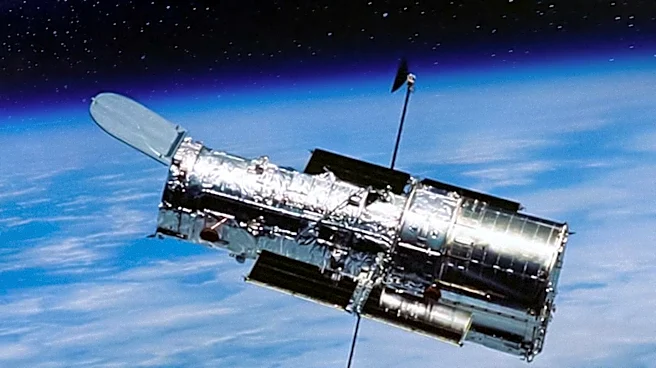
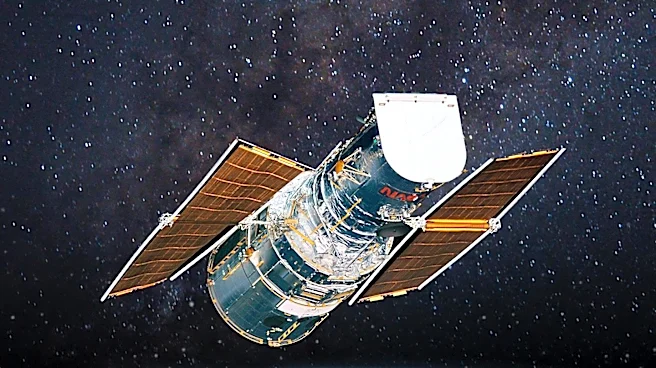
NASA has issued a Request for Information (RFI) in October 2026 to gauge industry interest and capabilities for potential commercial servicing missions for the Hubble Space Telescope. The RFI seeks proposals for three main objectives: boosting Hubble to a higher
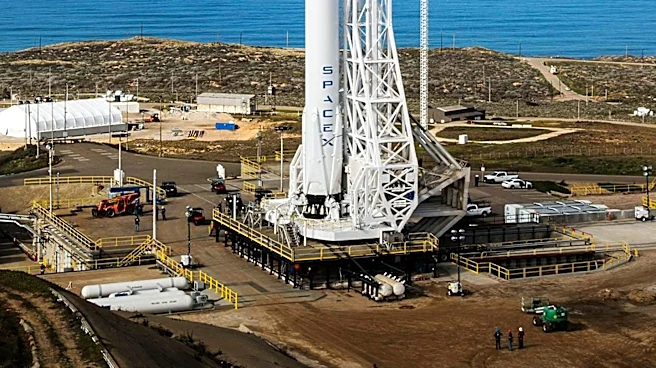
orbit to extend its scientific operational life, performing servicing to enhance its capabilities, or guiding it to a safe, controlled re-entry at the end of its mission. The Hubble Space Telescope, launched in 1990, is currently in a decaying orbit and is projected to re-enter Earth's atmosphere between 2033 and 2034 if no intervention occurs. This initiative follows a previous exploration in 2022, where NASA considered a crewed SpaceX mission to reboost Hubble, but ultimately decided against it in 2024 due to perceived risks. The current RFI emphasizes robotic servicing solutions, reflecting advancements in the commercial satellite-servicing industry.
Why It's Important?
The potential extension of the Hubble Space Telescope's operational life is crucial for the scientific community and U.S. space exploration efforts. Hubble remains a unique asset, providing observations in visible and ultraviolet light that complement newer telescopes like the James Webb Space Telescope, which primarily observes in infrared. Losing Hubble in the early 2030s would create a significant gap in visible-light astronomy until NASA's planned successor, the Habitable Worlds Observatory, is expected in the 2040s. A successful servicing mission could provide decades more of invaluable data, justifying the cost as a fraction of Hubble's original investment. This also signifies a growing reliance on commercial space capabilities for complex missions, potentially fostering innovation and competition within the U.S. space industry.
What's Next?
Responses to NASA's Request for Information are due by November 30, 2026. Following the evaluation of these responses, NASA will assess the feasibility, cost-effectiveness, and technical viability of proposed commercial servicing missions. While the RFI does not commit NASA to any specific mission or funding, it is a critical step in determining the future of the Hubble Space Telescope. Companies with expertise in robotic satellite servicing, such as Northrop Grumman, Astroscale, and Starfish Space, are expected to submit proposals. The decision on whether to proceed with a servicing mission will depend on the innovative and cost-effective solutions presented by the industry, as well as NASA's internal budget allocations and risk assessments. Any mission would likely need to fly by 2032 to effectively prevent an uncontrolled re-entry.
Beyond the Headlines
The renewed interest in servicing Hubble highlights a broader shift in space operations towards sustainability and asset maximization. Instead of solely focusing on launching new missions, there's a growing emphasis on extending the life of existing, valuable space infrastructure. This approach has significant implications for space debris mitigation, as controlled re-entry or orbital boosts can prevent large spacecraft from becoming uncontrolled hazards. Furthermore, the RFI's emphasis on robotic solutions underscores the maturation of autonomous in-space operations, potentially paving the way for more complex robotic repairs and upgrades of satellites in the future. This could lead to a more robust and resilient space economy, where on-orbit servicing becomes a standard practice, reducing the need for costly and time-consuming ground-up replacements.