






What's Happening?
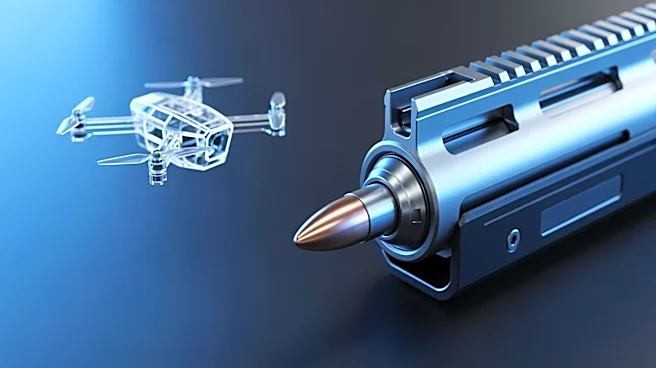
Kalashnikov Concern, Russia's leading small arms manufacturer, has announced the development of specialized 5.45mm rifle rounds designed to disable drones. These bullets, intended for use with the AK-12 assault rifle, release multi-element projectiles
to increase the likelihood of hitting unmanned aerial vehicles (UAVs). The initiative formalizes efforts to produce drone-killing ammunition for Russian troops, following sporadic battlefield use of similar bullets. The concept mirrors Ukraine's development of anti-drone rounds, which fragment to widen the impact area, and aligns with Western experiments in anti-drone rifle technology.
Why It's Important?
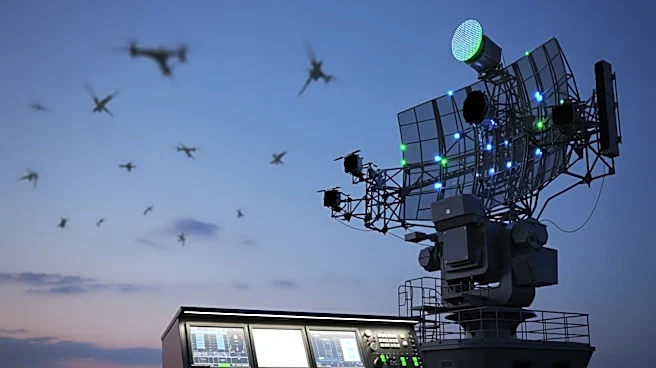
The development of anti-drone ammunition by Kalashnikov Concern signifies a strategic shift in addressing drone threats, reflecting the growing importance of counter-drone measures in modern warfare. This innovation could influence global defense strategies, prompting other nations to explore similar technologies. The focus on cost-effective solutions highlights the need for adaptable defense mechanisms against increasingly sophisticated drone attacks. As drone warfare becomes more prevalent, the demand for effective countermeasures is likely to drive advancements in military technology.
What's Next?
Kalashnikov Concern's mass production of anti-drone bullets may lead to increased adoption by Russian military units, enhancing their capabilities against UAV threats. This development could also spur international interest in similar technologies, potentially leading to collaborations and technological exchanges. As nations continue to invest in counter-drone measures, the defense industry may see a surge in innovation and competition, with companies striving to develop more effective solutions.
Beyond the Headlines
The proliferation of anti-drone technologies raises ethical and legal questions about the use of force against unmanned systems. The potential for collateral damage and civilian casualties remains a concern, necessitating careful consideration of the rules of engagement. Additionally, the focus on drone warfare underscores the evolving nature of military conflicts, with implications for international security and defense policies.