




What's Happening?
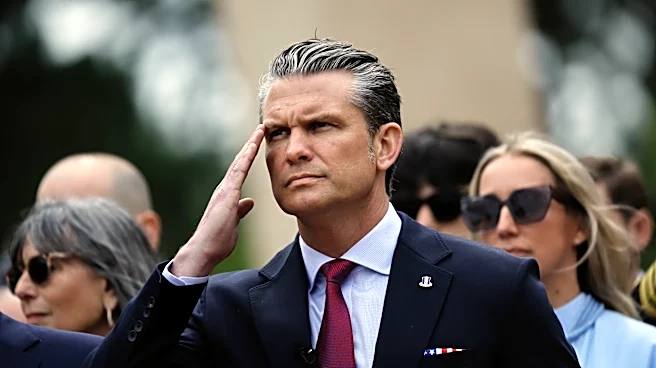
During a ceremony marking the 82nd anniversary of D-Day, Defense Secretary Pete Hegseth warned of an 'invasion' of dangerous ideologies in Europe. Speaking at the event, Hegseth emphasized the need for governments to take action against these ideologies,
which he did not specify. The ceremony was held to honor the sacrifices made during the historic World War II operation, and Hegseth's comments highlighted contemporary security concerns.
Why It's Important?
Hegseth's remarks underscore ongoing geopolitical tensions and the perceived threats posed by ideological movements. His warning reflects concerns about the influence of extremist ideologies and their potential impact on global stability. The statement may influence U.S. foreign policy and defense strategies, as well as international relations, particularly with European allies. It also highlights the importance of vigilance and cooperation in addressing security challenges.
What's Next?
The comments made by Hegseth could lead to discussions among U.S. and European leaders about collaborative efforts to counteract ideological threats. This may result in policy initiatives or joint security measures aimed at safeguarding democratic values and institutions. The focus on ideological threats may also shape future defense priorities and resource allocation.
Beyond the Headlines
Hegseth's warning raises questions about the balance between national security and civil liberties, as efforts to combat ideologies may involve surveillance and other measures. The emphasis on ideological threats also reflects broader cultural and political dynamics, where differing worldviews and values are increasingly at the forefront of international discourse.