



What's Happening?
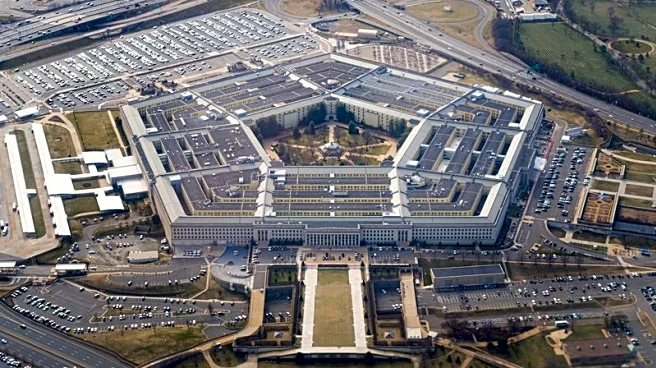
Defense Secretary Pete Hegseth has demanded that Anthropic provide full military access to its AI model, Claude, by the end of the week. The Pentagon is considering invoking the Defense Production Act to enforce compliance. Anthropic, which was awarded
a $200 million contract to develop AI capabilities for national security, has requested guardrails to prevent the AI from conducting mass surveillance or making autonomous military decisions. The Pentagon insists its requests are lawful and necessary for national security. Trust issues have emerged between the Pentagon and Anthropic, with the latter concerned about the potential misuse of its AI technology.
Why It's Important?
The demand for full access to Anthropic's AI model highlights the growing importance of artificial intelligence in military operations. The situation underscores the tension between technological innovation and ethical considerations, particularly regarding surveillance and autonomous decision-making. The outcome of this standoff could set a precedent for how AI technologies are integrated into national security frameworks. It also raises questions about the balance between government control and corporate autonomy in the development and deployment of advanced technologies.
What's Next?
If Anthropic does not comply with the Pentagon's demands, the government may invoke the Defense Production Act, potentially leading to legal and operational challenges. The situation could prompt broader discussions about the ethical use of AI in military contexts and the need for clear regulations. Other AI companies may also be affected by the outcome, influencing their willingness to collaborate with the government. The resolution of this issue will likely impact future contracts and partnerships between the tech industry and the defense sector.