







What's Happening?
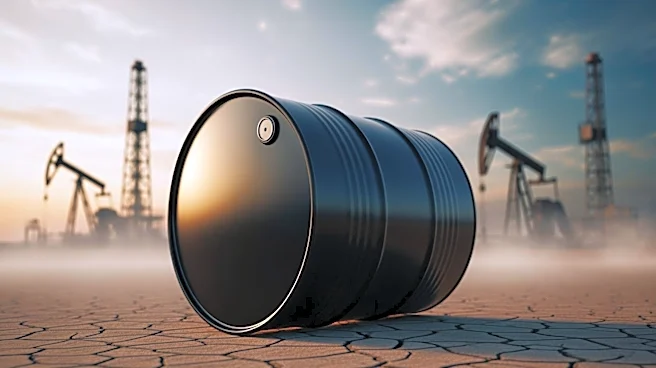
The ongoing conflict involving Iran has led to a rapid depletion of global oil reserves, as the war has significantly disrupted oil flows from the Persian Gulf. This has resulted in a record drawdown of oil inventories, with Morgan Stanley estimating
a reduction of about 4.8 million barrels per day between March 1 and April 25. The depletion of reserves poses a risk of extreme price spikes and shortages, leaving governments and industries with limited options to mitigate the impact. The situation is exacerbated by the near-closure of the Strait of Hormuz, a critical chokepoint for global oil transportation.
Why It's Important?
The depletion of oil reserves due to the Iran conflict has significant implications for global energy markets. The reduced supply and increased prices could lead to higher inflation and potentially trigger a global recession. Countries heavily reliant on oil imports, particularly in Asia, are at risk of facing critical shortages, which could impact their economies. The situation underscores the vulnerability of global energy supplies to geopolitical conflicts and the importance of maintaining strategic reserves to cushion against such disruptions.
What's Next?
As the conflict continues, the global oil market remains vulnerable to further disruptions. Governments may need to release more strategic reserves to stabilize prices, but this could further deplete the buffer against future shocks. The reopening of the Strait of Hormuz is crucial for restoring normal oil flows, but even then, it may take time for the market to stabilize. Countries may also need to explore alternative energy sources and increase investments in renewable energy to reduce dependence on oil imports.