





What's Happening?
U.S. Representative Valerie Foushee has requested $1.5 million in federal Fiscal Year 2026 funding for the Durham Police Department. This funding is intended to equip the department's Real-Time Crime Center, a system developed with software firm Peregrine.
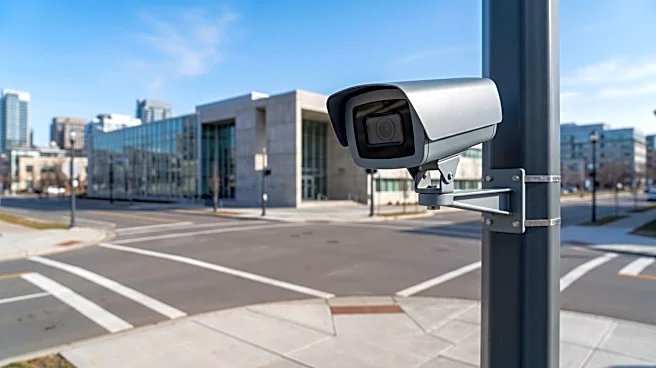
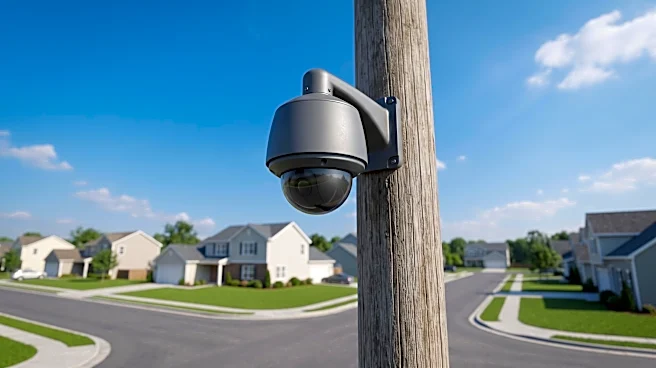
The center aims to centralize camera feeds, 911 logs, and sensor data to enhance the efficiency of police response. This initiative comes as the Durham Police Department faces significant staffing constraints, with department data from 2026 indicating a 19.4% shortage, as 103 out of 531 sworn officer positions are vacant, and 428 positions are filled, including recruits still in training. The request for federal aid is part of broader efforts to address rising violent crime in Durham, which saw a 4.6% increase in Part 1 violent crime in early 2026 compared to the previous year, driven by a 44.4% jump in homicides and a 14.8% increase in aggravated assaults.
Why It's Important?
The proposed federal funding for Durham's Real-Time Crime Center is important for several reasons. Firstly, it directly addresses the critical issue of police staffing shortages and aims to augment the capabilities of an understaffed department through technological integration. By centralizing various data streams, the system is designed to improve response times to incidents, potentially leading to more effective crime prevention and resolution. Secondly, the investment reflects a growing trend in U.S. law enforcement towards leveraging advanced technology, such as AI and data analytics, to combat crime. This move could serve as a model for other municipalities facing similar challenges, highlighting the potential for federal support in local crime-fighting initiatives. Lastly, the focus on enhancing police response efficiency is crucial for public safety and community trust, especially in areas experiencing an uptick in violent crime, as seen in Durham.
What's Next?
If approved, the $1.5 million federal funding would enable the Durham Police Department to proceed with equipping its Real-Time Crime Center. This would likely involve the procurement and integration of necessary hardware and software, as well as training for personnel to operate the new system. The effectiveness of the Real-Time Crime Center in improving police response times and reducing crime rates will be closely monitored, potentially influencing future federal funding decisions for similar technological initiatives in other U.S. cities. Additionally, the ongoing debate regarding the efficacy of surveillance tools, such as gunshot detection systems, will continue to shape public and political discourse around such investments. The department will also need to continue its efforts to address staffing shortages, as technology alone may not fully compensate for a lack of personnel.
Beyond the Headlines
This initiative by Representative Foushee highlights a broader national conversation about the role of technology in policing and the balance between surveillance and civil liberties. While the Real-Time Crime Center aims to enhance public safety through rapid data analysis, it also raises questions about data privacy, potential for algorithmic bias, and the extent of government surveillance. The reliance on technology to compensate for staffing shortfalls in law enforcement could lead to a re-evaluation of traditional policing models and the allocation of resources. Furthermore, the success or failure of such technologically advanced centers could influence future policy decisions regarding federal funding for local police departments, potentially shifting the focus towards tech-driven solutions rather than solely increasing officer numbers. This also underscores the ethical considerations involved in deploying AI and data analytics in sensitive areas like law enforcement, necessitating robust oversight and transparency.