


What's Happening?
Save the Children is employing diverse and often challenging logistical methods to deliver essential aid to children and families in remote and crisis-affected areas worldwide. The organization utilizes a range of transport, from trucks and planes to vans,
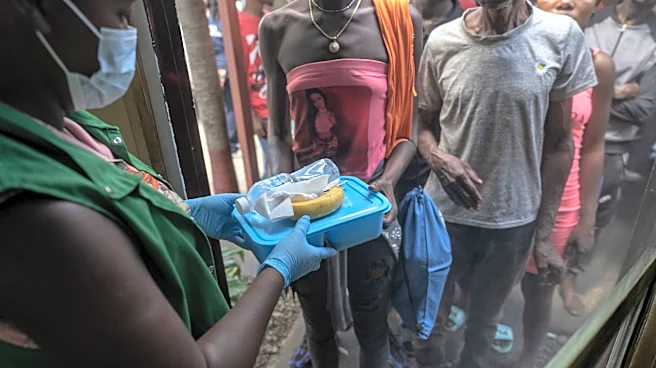
donkeys, and boats, to cover the 'last mile' where conventional infrastructure is absent or compromised. This includes delivering shelter kits to flood-hit Nepal, medical supplies via charter planes to South Sudan where roads are often impassable, and school kits to children in war-torn Ukraine. In Somalia, vaccines are transported by ambulance and then by donkey or on foot to reach communities 250-300 km from health facilities. The organization also supports baby banks in the UK, providing essentials like cots and nappies, with delivery services for families who cannot collect items themselves. These efforts highlight the critical need for adaptable and resilient supply chains in humanitarian aid.
Why It's Important?
The innovative and flexible aid delivery strategies employed by Save the Children are crucial for addressing the immediate and long-term needs of vulnerable populations, particularly children, in complex environments. By overcoming geographical barriers and conflict-related challenges, the organization ensures access to life-saving resources such as medicine, vaccines, shelter, and educational materials. This directly impacts child survival rates, health outcomes, and educational continuity, which are foundational for future development. The emphasis on 'last mile' delivery and community engagement builds trust and ensures that aid is not only delivered but also effectively utilized. The model demonstrates how humanitarian organizations adapt to severe logistical constraints, setting precedents for effective aid distribution in future crises and highlighting the ongoing need for international support and funding to sustain these critical operations.
What's Next?
Save the Children continues to focus on pre-positioning supplies in warehouses to enable rapid response to crises, as demonstrated by their swift action in Nepal. The organization will likely continue to refine its adaptable delivery methods, leveraging various transport options and local partnerships to reach the most isolated communities. Ongoing efforts will include strengthening cold chain logistics for vaccines and ensuring risk assessments are integral to aid delivery in conflict zones. Furthermore, the organization will persist in its advocacy for children's rights and seek sustained funding to support these complex operations, particularly as global crises like climate change and conflicts continue to displace populations and disrupt essential services. The model of building trust through consistent engagement will remain a core component of their strategy.
Beyond the Headlines
The detailed account of Save the Children's aid delivery methods underscores the profound ethical and practical challenges inherent in humanitarian work. Beyond the immediate logistical hurdles, the organization navigates issues of trust-building in communities wary of external intervention, ensuring cultural appropriateness of aid, and protecting aid workers in dangerous environments. The reliance on diverse transport, from high-tech planes to traditional donkeys, symbolizes a pragmatic approach that prioritizes human need over conventional efficiency. This adaptability also highlights the stark inequalities in global infrastructure and access to basic services, pushing organizations to fill critical gaps where governments or local systems are unable to function. The long-term impact extends to fostering resilience in communities and empowering local populations to participate in their own recovery and development.