
What's Happening?
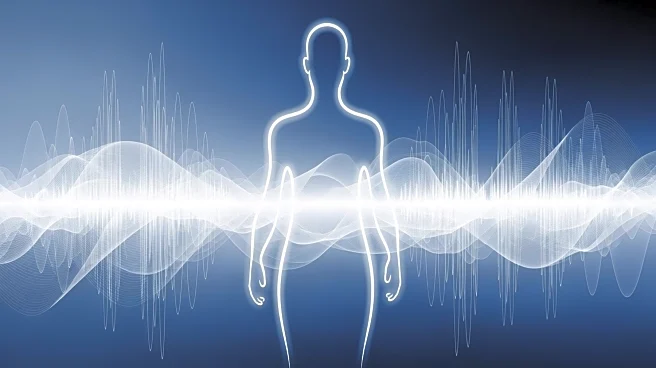
Researchers at Karolinska Institutet have conducted a study, published in Nature Communications, exploring how rhythmic brain waves, specifically alpha oscillations, contribute to the perception of body
ownership. The study involved 106 participants and utilized a combination of behavioral experiments, EEG brain recordings, brain stimulation, and computational modeling. The research focused on how the brain integrates visual and tactile signals to create a sense of bodily self. The findings indicate that the frequency of alpha waves in the parietal cortex, which processes sensory information, plays a crucial role in how individuals perceive their body as their own. Participants with faster alpha frequencies demonstrated a more precise sense of body ownership, while those with slower frequencies experienced a broader temporal binding window, making it harder to distinguish between self-related and external sensations.
Why It's Important?
This research provides significant insights into the fundamental brain processes that shape our continuous experience of being embodied. Understanding how alpha waves influence body ownership perception could have implications for psychiatric conditions like schizophrenia, where the sense of self is often disturbed. Additionally, the findings could inform the development of more effective prosthetic limbs and enhance virtual reality experiences by improving the integration of sensory signals. By identifying how the brain resolves the challenge of integrating bodily signals, this study opens avenues for technological advancements in medical and entertainment fields, potentially benefiting individuals with sensory integration disorders or those using assistive technologies.
What's Next?
Future research may focus on further exploring the applications of these findings in clinical settings, particularly in developing therapeutic interventions for psychiatric disorders. Additionally, the study's insights could lead to innovations in prosthetic design and virtual reality technology, enhancing user experience by providing a more realistic sense of body ownership. Researchers might also investigate how these findings can be applied to improve sensory integration therapies for individuals with autism or other sensory processing disorders.
Beyond the Headlines
The study highlights the intricate relationship between brain wave frequencies and sensory perception, suggesting that even subtle changes in neural oscillations can significantly impact our sense of self. This underscores the importance of understanding neural dynamics in developing technologies that interact with human perception. The ethical implications of manipulating brain waves for therapeutic or enhancement purposes may also warrant consideration, as such interventions could alter fundamental aspects of personal identity and self-perception.