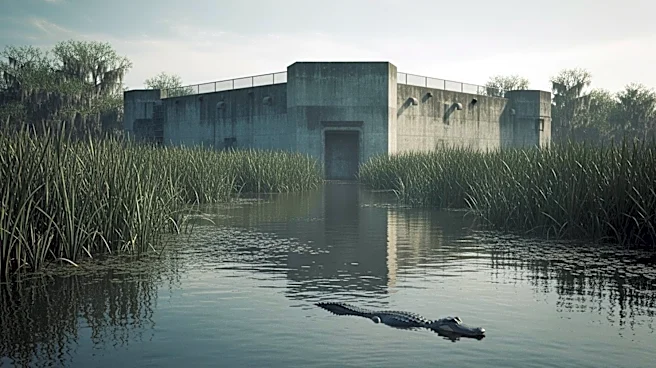











What's Happening?
The Florida immigration detention facility known as 'Alligator Alcatraz' is closing, with detainees being relocated. Governor Ron DeSantis announced the closure, stating the facility had fulfilled its temporary purpose of supporting federal immigration enforcement.
The site, which opened less than a year ago, was a symbol of Florida's support for President Trump's immigration policies. However, it faced criticism for environmental and human rights concerns. The closure comes as Florida's emergency funds are depleted, having spent over $400 million on the facility, impacting the state's preparedness for the upcoming hurricane season.
Why It's Important?
The closure of 'Alligator Alcatraz' highlights the financial and political challenges of state-level immigration enforcement. The significant expenditure on the facility has strained Florida's disaster preparedness funds, raising concerns about the state's ability to respond to natural disasters. This situation underscores the tension between state and federal responsibilities in immigration policy and the potential consequences of using emergency funds for political purposes. The financial burden on Florida may prompt discussions on the sustainability of such facilities and the need for federal support in managing immigration enforcement.
What's Next?
With the facility's closure, Florida officials are seeking reimbursement from the federal government for the costs incurred. The state hopes to recover funds through a federal grant, but the Trump administration has only partially reimbursed Florida so far. The depletion of emergency funds may lead to increased scrutiny of state spending and calls for greater transparency. As hurricane season approaches, Florida will need to prioritize its disaster preparedness efforts, potentially impacting future policy decisions on immigration enforcement and emergency fund allocation.