



What's Happening?
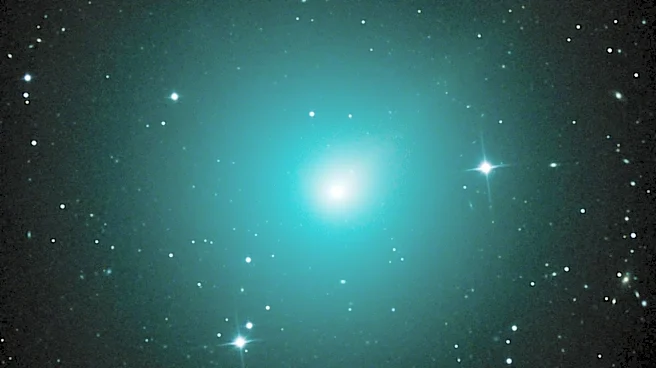
New simulations conducted by astronomer Richard Anslow from the University of Cambridge and his team suggest that the theory of comets seeding life on Earth is highly improbable. For over a century, it has been hypothesized that prebiotic chemicals, essential
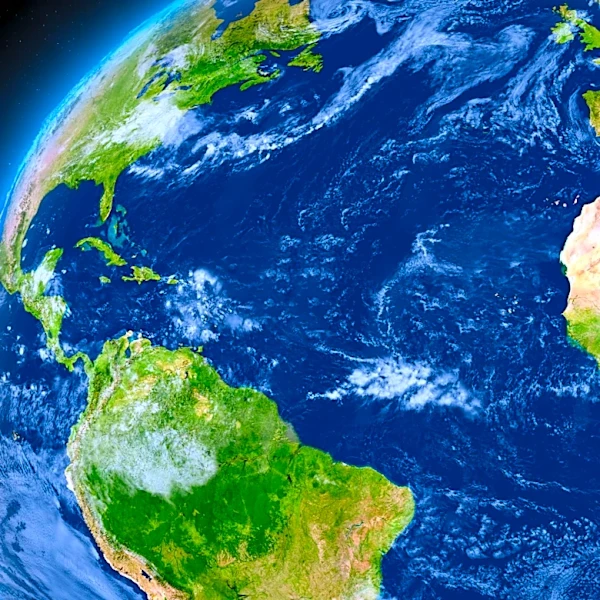
for life, could have been delivered to Earth by comets. While organic molecules have been detected in comets, the new study, published in Scientific Reports, ran 100,000 simulations to test the viability of this delivery mechanism. The simulations focused on hydrogen cyanide, a 'feedstock' molecule crucial for synthesizing life's building blocks. The results indicate that in 54% of the simulations, not enough hydrogen cyanide would have been successfully delivered to Earth's land due to comets breaking apart in the atmosphere, chemical loss during impact, or dilution in oceans. Even in successful deliveries, the opportunity for prebiotic chemistry would have been fleeting, making the scenario a 'one-in-a-million occurrence' at best.
Why It's Important?
This research significantly challenges a long-standing theory about the origin of life on Earth, potentially redirecting scientific inquiry into alternative hypotheses. If cometary impacts were indeed unlikely to deliver sufficient prebiotic material, scientists will need to explore other mechanisms for the initial accumulation of life's building blocks on our planet. The findings underscore the importance of rigorous simulation and empirical testing in evaluating scientific theories, even those that are widely accepted or 'romantic.' While the study doesn't definitively rule out the possibility, it quantifies the extreme improbability, shifting the burden of proof for proponents of the cometary seeding hypothesis. This could lead to increased focus on terrestrial origins of life or other extraterrestrial delivery mechanisms, such as meteorites, which might offer more favorable conditions for chemical preservation.
What's Next?
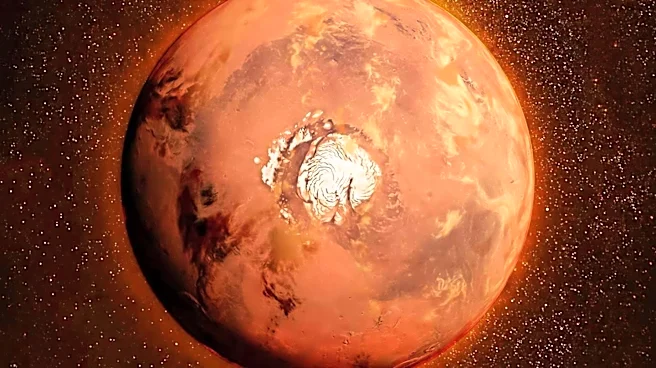
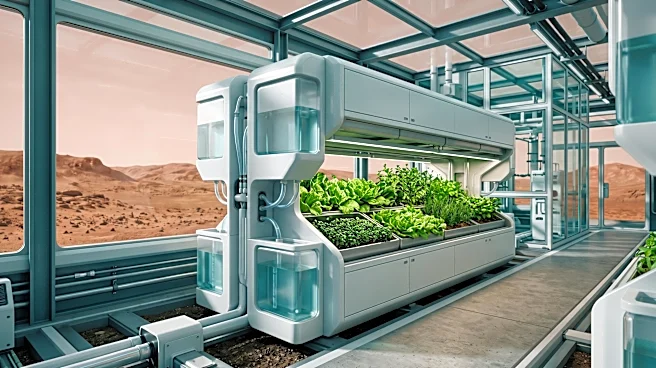
The study's authors suggest that while cometary seeding for Earth is unlikely, Mars presents a more favorable environment for this hypothesis due to its thinner atmosphere and lower impact velocities, potentially allowing for five times more successful deliveries. This opens new avenues for research into the potential for life on Mars and other celestial bodies. Future research may involve refining simulations with more complex chemical interactions, exploring different types of feedstock molecules, or investigating other delivery mechanisms. The scientific community will likely continue to debate and test various theories for abiogenesis, with this study providing a crucial data point that narrows the scope of plausible extraterrestrial origins for life on Earth.
Beyond the Headlines
The question of life's origins is one of humanity's most profound scientific inquiries, touching upon philosophical and existential themes. This study, by challenging a popular theory, highlights the dynamic nature of scientific understanding and the continuous process of questioning and refining our knowledge. It also illustrates how seemingly simple questions can lead to complex computational challenges, requiring extensive simulations to model intricate physical and chemical processes. The findings might also influence public perception of astrobiology, emphasizing the need for evidence-based conclusions over speculative narratives. Ultimately, the search for life's beginnings continues to be a driving force for innovation in space exploration, planetary science, and biochemistry.