





What's Happening?
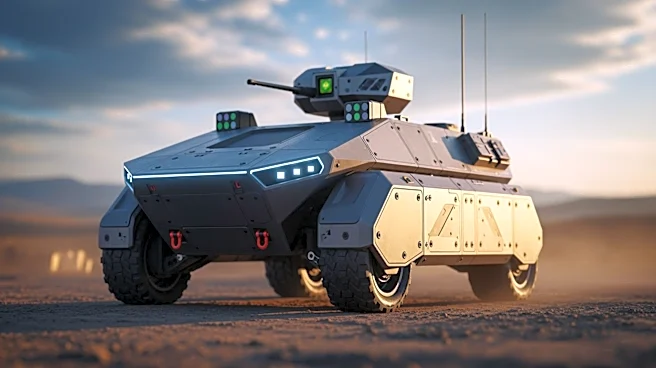
The U.S. Army is actively pursuing the development of autonomous unmanned ground vehicles (UGVs) to enhance logistics and casualty evacuation capabilities on the battlefield. According to a government notice, these UGVs are intended to operate in the 'last
tactical mile,' a critical area between support units and frontline troops where supplies and casualties are most vulnerable to enemy observation and attacks. The Army's initiative is driven by the need to navigate complex terrains without GPS, maintain a low profile, and integrate seamlessly with military networks. The Ukrainian military's successful use of UGVs, which now constitute 90% of its logistics operations, has demonstrated the effectiveness of these systems in high-risk areas, prompting the U.S. Army to expand its own capabilities.
Why It's Important?
The development and deployment of autonomous UGVs are crucial for modern military operations, particularly in environments characterized by persistent enemy surveillance and rapid application of lethal effects. These vehicles can significantly reduce risks to personnel by autonomously delivering supplies and evacuating casualties, thereby enhancing mission effectiveness and safety. The initiative reflects a broader trend in military technology towards unmanned systems, which are increasingly seen as vital for maintaining operational efficiency and reducing human exposure to danger. The U.S. Army's focus on UGVs underscores the importance of technological innovation in addressing logistical challenges and improving battlefield outcomes.
What's Next?
Industry responses to the Army's UGV notice are expected by April 28, indicating a potential timeline for further development and testing of these systems. As the Army evaluates proposals, it will likely consider factors such as payload capacity, terrain adaptability, and integration capabilities. The successful implementation of UGVs could lead to broader adoption across other military branches, further advancing the use of autonomous systems in various operational contexts. Continued collaboration with defense contractors and technology developers will be essential in refining these vehicles to meet the dynamic needs of military formations.
Beyond the Headlines
The shift towards autonomous UGVs raises important ethical and strategic considerations, particularly regarding the role of automation in warfare. As these systems become more prevalent, questions about accountability, decision-making, and the potential for unintended consequences will need to be addressed. Additionally, the integration of UGVs into military operations may influence future defense policies and procurement strategies, emphasizing the need for robust cybersecurity measures to protect against potential vulnerabilities in autonomous systems.