
What's Happening?
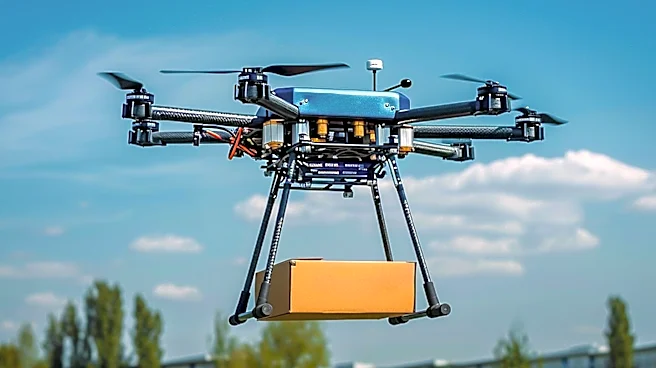
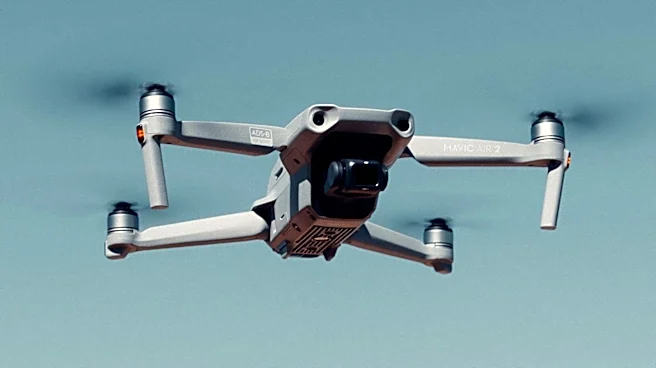
The Royal Navy has successfully conducted trials integrating drones with Wildcat helicopters, showcasing the potential for uncrewed systems to work alongside traditional air power. The trial, named Dragon Rider, involved the Maritime Aviation Strike Operational
Advantage Group and demonstrated the ability to control drones over large distances using secure communications systems. This development is part of the Royal Navy's Hybrid Navy plans, aiming to enhance operational capabilities by pairing drones with manned aircraft for various military applications.
Why It's Important?
The successful integration of drones with Wildcat helicopters represents a significant advancement in military aviation, offering enhanced operational flexibility and safety. By allowing drones to handle dangerous tasks, the Royal Navy can reduce risks to personnel while increasing the number of units deployed simultaneously. This capability could revolutionize military operations, providing real-time intelligence and expanding the range of missions that can be conducted. The trial's success also highlights the potential for further innovation in military technology, as armed forces worldwide seek to leverage uncrewed systems for strategic advantages.
What's Next?
Following the successful trial, the Royal Navy is likely to continue developing and refining its Hybrid Navy plans, potentially leading to the broader adoption of drone technology in military operations. Future trials may focus on integrating additional capabilities, such as satellite communications, to enable global control of drone fleets. The Royal Navy's advancements could influence other military organizations to explore similar integrations, driving further innovation in the defense sector. Stakeholders will be monitoring these developments to assess their impact on military strategy and capabilities.