





What's Happening?
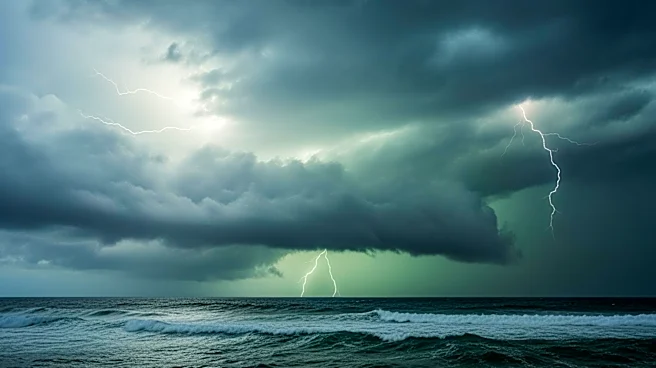
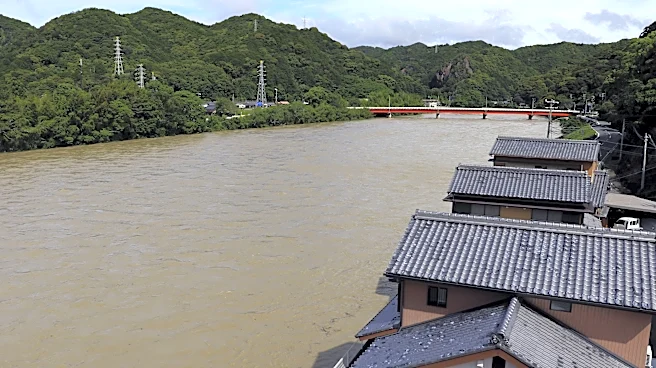
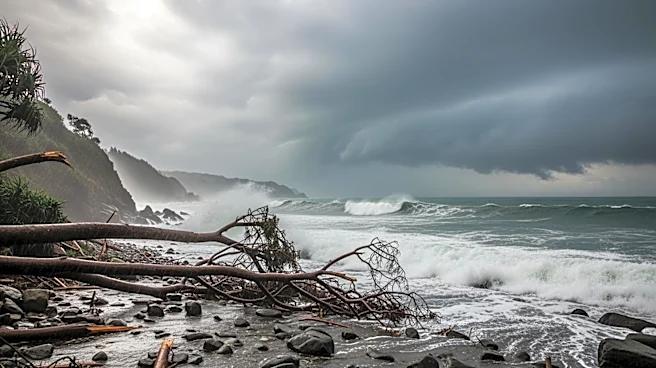
Typhoon Jangmi, also known as Typhoon No 6, has moved northwards across Japan, causing significant damage and injuries. The typhoon brought prolonged and heavy rainfall, leading to landslide warnings and river flooding. Japan issued level 4 warnings for
some rivers, indicating a high risk of overflowing, which is sufficient for municipalities to issue evacuation orders. The typhoon recorded sustained wind speeds of 80mph, classifying it as a category 1 typhoon. By Wednesday, 23 people were injured, with 17 injuries reported in Okinawa. The storm damaged 57 homes and caused power outages for 60,000 homes. Additionally, 1.52 million people were advised to evacuate. The typhoon also damaged the exterior wall of Himeji Castle, a UNESCO world heritage site. The typhoon has since weakened into a tropical depression and moved eastwards.
Why It's Important?
The impact of Typhoon Jangmi highlights the vulnerability of infrastructure and communities to severe weather events in Japan. The extensive damage to homes, power outages, and the need for mass evacuations underscore the challenges faced by emergency services and local governments in responding to natural disasters. The damage to Himeji Castle, a cultural heritage site, also emphasizes the potential loss of cultural assets during such events. The typhoon's impact on transportation and infrastructure could have long-term economic implications, affecting local businesses and the broader economy. The event serves as a reminder of the importance of disaster preparedness and the need for resilient infrastructure to withstand extreme weather conditions.