



What's Happening?
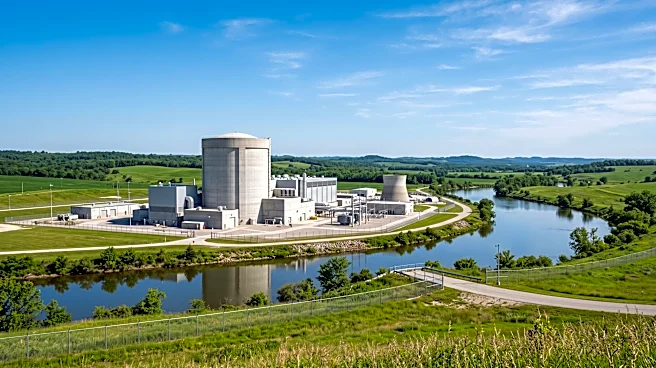
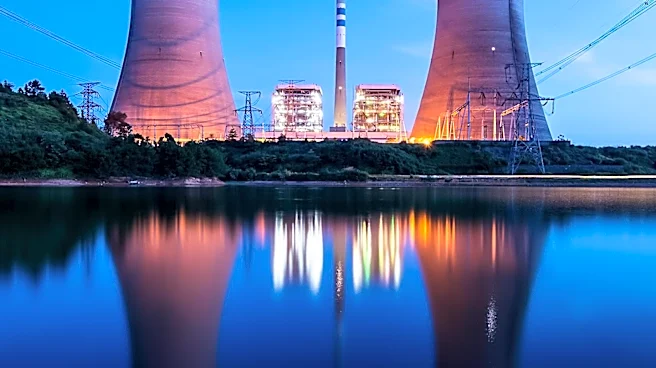
The United States has added only one nuclear power plant, Georgia’s Plant Vogtle, in the past decade, while China has added 34 gigawatts of nuclear capacity during the same period. This disparity puts China on track to become the world's largest nuclear power producer
within the next five years, surpassing both France and the U.S. According to Damien Ma, energy lead analyst for Gavekal Technologies, China's nuclear industry is projected to be the most dynamic globally through 2035, largely due to its construction efficiencies, which allow new plants to be built in about six years compared to over a decade in the U.S. The U.S. currently operates 96 reactors across 28 states, but the average age of these units is 44 years, exceeding their initial 40-year license. The slow pace of U.S. nuclear development is attributed to a combination of factors, including a lack of recent construction experience, extensive regulatory hurdles, and significant financial challenges associated with multi-billion-dollar projects that often face delays and budget overruns.
Why It's Important?
The significant lag in U.S. nuclear power development compared to China has profound implications for global energy leadership and national energy security. As China rapidly expands its nuclear capacity, it gains a strategic advantage in clean energy production and technological expertise, potentially influencing international energy markets and standards. For the U.S., the aging nuclear fleet and slow replacement rate could lead to increased reliance on other energy sources, impacting its energy independence and climate goals. The financial models currently used for nuclear projects in the U.S. are criticized for being too narrow, focusing only on project-level returns within a license timeframe and failing to account for broader long-term benefits such as energy security and public welfare. This limited financial perspective deters investors and hinders the mobilization of necessary capital for new nuclear projects, which are crucial for meeting growing energy demands, particularly with the rise of AI-driven energy consumption.
What's Next?
To address the stagnation in U.S. nuclear power growth, there is a call for a re-evaluation of financial models to incorporate the long-term societal and economic benefits of nuclear energy. Moving beyond traditional project-level returns to more sophisticated economic impact models could help attract investors and justify government funding. Such models would better account for the extended operational lifespans of nuclear reactors and their contributions to energy security and public welfare. Additionally, streamlining regulatory processes and rebuilding the domestic workforce with nuclear plant construction expertise will be critical. The lessons learned from projects like Plant Vogtle, despite its cost and schedule overruns, could inform future endeavors to improve efficiency. Without these changes, the U.S. risks falling further behind in the global nuclear energy race, potentially impacting its strategic position in the evolving global energy landscape.
Beyond the Headlines
The disparity in nuclear power development between the U.S. and China highlights a broader challenge in American infrastructure and industrial policy. The U.S. approach, characterized by complex regulatory environments and a reliance on short-term financial metrics, contrasts sharply with China's more centralized, long-term strategic planning and execution. This divergence could lead to a significant shift in global technological leadership, with China potentially setting future standards in nuclear energy technology and deployment. The ethical implications also arise concerning energy equity and environmental impact; while nuclear power offers a carbon-free energy source, the slow U.S. adoption could prolong reliance on fossil fuels, affecting climate change mitigation efforts. Furthermore, the decline in U.S. nuclear construction expertise represents a loss of critical national capability, potentially making it harder to innovate and compete in advanced nuclear technologies, which are vital for future energy security and technological sovereignty.