




What's Happening?
Representatives Vince Fong (CA-20) and Josh Gottheimer (NJ-05) have introduced the Bridging Resources for Innovative Defense and Government Expertise in Artificial Intelligence (BRIDGE AI) Act, H.R. 11055. This bipartisan legislation aims to strengthen
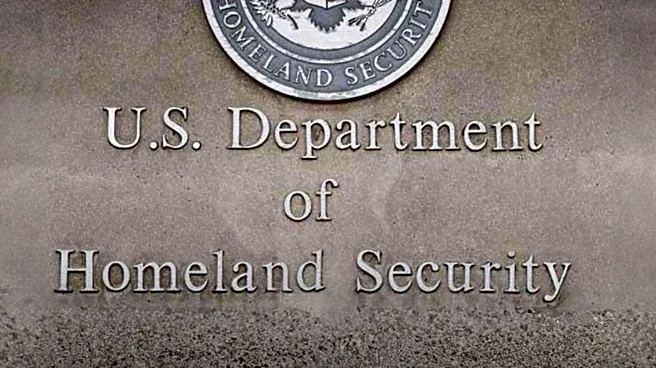
U.S. cybersecurity by authorizing the Cybersecurity and Infrastructure Security Agency (CISA) to collaborate with private-sector artificial intelligence (AI) professionals. The bill proposes a pilot program that would allow 75 to 125 private-sector experts to serve within CISA, facilitating knowledge transfer to career CISA employees to enhance their AI expertise. The legislation also includes provisions for rigorous ethics and conflict of interest safeguards and mandates semiannual reports to Congress on the program's status and recommendations. This initiative comes as AI-driven cyberattacks are increasingly targeting critical infrastructure, including schools, hospitals, and water systems, making it crucial for federal agencies like CISA to keep pace with evolving threats.
Why It's Important?
The BRIDGE AI Act is significant because it addresses the growing threat of sophisticated AI-driven cyberattacks on U.S. critical infrastructure. By enabling CISA to integrate private-sector AI expertise, the bill aims to modernize the agency's defenses and improve its ability to identify and mitigate vulnerabilities. This collaboration is crucial as adversaries increasingly leverage AI to accelerate cyber operations and exploit system weaknesses. Protecting critical infrastructure, such as healthcare facilities, educational institutions, and utility providers, is vital for national security and public safety. The legislation seeks to ensure that CISA has access to the most advanced tools and knowledge to counter these evolving threats, thereby safeguarding essential services that Americans rely on daily. The bipartisan nature of the bill underscores a shared recognition of the urgency and importance of bolstering national cybersecurity capabilities against AI-powered threats.
What's Next?
Following its introduction, the BRIDGE AI Act will proceed through the legislative process, requiring committee review and potential votes in both the House and Senate. If enacted, CISA would begin establishing the pilot program, recruiting private-sector AI professionals, and implementing the knowledge transfer mechanisms. The agency would also be responsible for submitting semiannual reports to Congress, detailing the program's progress, participation, and any recommendations for improvement. Stakeholders, including cybersecurity experts, private AI firms, and critical infrastructure operators, will likely monitor the bill's progression and potential implementation closely. The success of this initiative could lead to further integration of private-sector expertise within government agencies to address rapidly evolving technological threats, potentially influencing future policy decisions regarding public-private partnerships in national security.
Beyond the Headlines
The BRIDGE AI Act highlights a broader trend of government agencies seeking to leverage private-sector innovation to address complex technological challenges. This initiative raises important questions about the balance between government oversight and private-sector agility, particularly concerning sensitive areas like national cybersecurity. Ethical considerations and conflict of interest safeguards, explicitly mentioned in the bill, will be crucial in ensuring the integrity and effectiveness of such partnerships. Furthermore, the act underscores the increasing reliance on AI in both offensive and defensive cyber operations, signaling a long-term shift in how nations approach digital warfare and defense. The success of this pilot program could set a precedent for how the U.S. government adapts to rapid technological advancements, potentially influencing strategies for other emerging technologies and their implications for national security and economic stability.