
What's Happening?
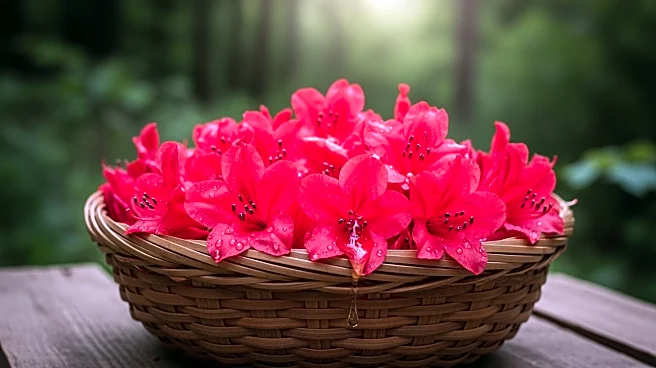
In Nepal, the Gurung and Magar tribes have been harvesting 'mad honey' from the cliffs of the Himalayas for over 2,000 years. This honey, known for its psychoactive properties due to the toxic rhododendron
flowers, is collected by men who descend bamboo rope ladders to cut down massive honeycombs. The honey is used as traditional medicine and is highly valued, selling for several times the price of regular honey. However, the tradition is at risk as younger generations are moving to cities for easier jobs, leaving the ancient practice to fade. The honey harvest is a dangerous task, involving swarms of bees and challenging conditions, but it remains a vital cultural ritual for the tribes.
Why It's Important?
The decline of this ancient tradition highlights broader issues of cultural preservation and economic shifts in rural communities. As younger generations leave for urban areas, traditional practices that have sustained communities for centuries are at risk of disappearing. This not only affects the cultural heritage of the tribes but also their economic stability, as the honey harvest is a significant source of income. The story underscores the tension between modernization and the preservation of cultural identities, a challenge faced by many indigenous communities worldwide.
What's Next?
The future of the 'mad honey' harvest depends on efforts to preserve this cultural practice. This could involve initiatives to promote the tradition as a form of cultural tourism, providing economic incentives for younger generations to continue the practice. Additionally, raising awareness about the cultural and economic importance of the honey harvest could help garner support for its preservation. The involvement of local and international organizations in supporting sustainable practices could also play a crucial role in ensuring the tradition's survival.
Beyond the Headlines
The story of Nepal's 'mad honey' harvest raises questions about the ethical implications of cultural tourism and the commodification of indigenous practices. While tourism can provide economic benefits, it also risks altering the authenticity of cultural rituals. There is a delicate balance between preserving traditions and adapting them to modern economic realities. Furthermore, the psychoactive properties of 'mad honey' highlight the complex relationship between traditional medicine and modern health practices, prompting discussions on the regulation and safety of such substances.