






What's Happening?
An international research team, including scientists from the University of Freiburg, has found that while global warming is leading to longer growing seasons for plants worldwide, rising temperatures and increasing aridity may ultimately hinder forest
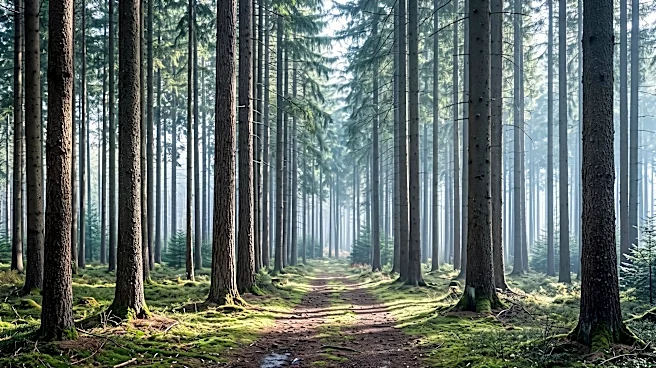
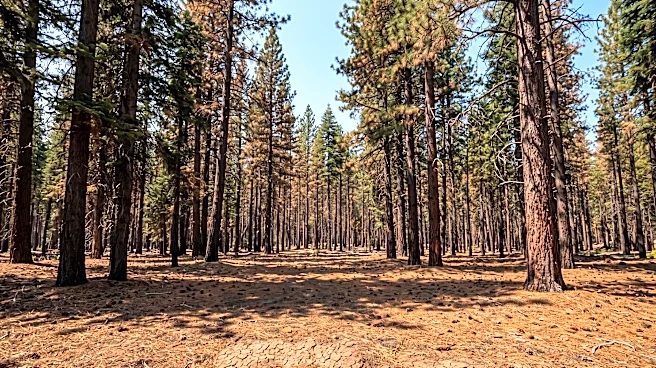
growth, especially for conifers. The study analyzed wood formation in 27 conifer species across over 100 sites in Europe, North and South America, and East Asia. Researchers observed that although longer growing seasons at warmer locations initially led to higher cell production, the growth rate of cells, which peaks around six degrees Celsius, was a decisive factor. Above this temperature, increasingly dry conditions negatively impacted growth. This suggests that further global warming could result in reduced wood growth, counteracting the benefits of extended growing seasons.
Why It's Important?
This research has significant implications for the U.S. and global efforts to combat climate change, particularly concerning carbon sequestration. Forests play a crucial role in absorbing atmospheric carbon dioxide, and a reduction in their growth rate would diminish their capacity to act as carbon sinks. For the U.S., this could impact national climate goals, forest management strategies, and industries reliant on timber. Slower forest growth could also exacerbate wildfire risks in already drought-prone regions and affect biodiversity. The findings challenge the assumption that longer growing seasons are universally beneficial for forest health and carbon uptake, necessitating a re-evaluation of climate models and conservation policies. Understanding these complex interactions is vital for developing effective adaptation and mitigation strategies to protect U.S. forest ecosystems and their ecological services.
What's Next?
The findings suggest a need for revised climate models that incorporate the nuanced effects of rising temperatures and aridity on forest growth, particularly for conifers. Future research will likely focus on understanding the specific physiological mechanisms behind this growth inhibition and identifying tree species that may be more resilient to these changing conditions. Forest management practices in the U.S. and globally may need to adapt, potentially including strategies for drought-resistant planting, improved water management, and targeted conservation efforts for vulnerable species. Policymakers may also need to consider the reduced carbon sequestration potential of forests when setting emission targets and developing land-use policies. International collaboration among research institutions will continue to be crucial for monitoring and addressing these complex ecological shifts.
Beyond the Headlines
The study highlights a critical feedback loop within the climate system: while forests are vital for mitigating climate change, climate change itself can impair their ability to perform this function. This creates a deeper challenge for environmental policy, moving beyond simply planting trees to ensuring the long-term health and resilience of forest ecosystems in a warming world. The ethical dimension involves our responsibility to protect these natural carbon sinks and the biodiversity they support, especially as human-induced climate change directly threatens their viability. Culturally, this research may prompt a re-evaluation of how society values and manages natural resources, emphasizing the interconnectedness of ecological systems and the need for sustainable practices that consider the long-term impacts of environmental change.