




What's Happening?
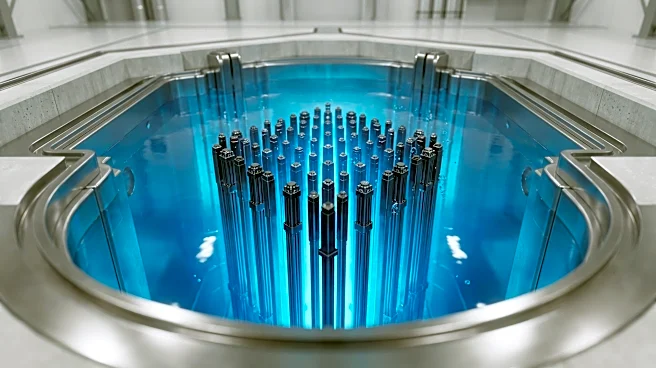
Engineers at Purdue University have successfully conducted the first experimental, remote, and automated adjustment of a nuclear reactor's power in the U.S. This demonstration linked Purdue's 64-year-old research reactor, PUR-1, with Idaho National Laboratory
(INL) and a Microsoft cloud system, creating a three-site loop across Indiana and Idaho. The experiment involved INL running the analytic side from its high-performance computing systems, Microsoft Azure providing the cloud environment, and the University of Illinois Urbana-Champaign assisting with data handling. The distributed system calculated and delivered instructions for the movement of an auxiliary control rod at PUR-1, fine-tuning reactor power and reducing small fluctuations without manual intervention on-site. This achievement builds on PUR-1's conversion in 2019 to the first fully digital instrumentation and control (I&C) system licensed by the U.S. Nuclear Regulatory Commission (NRC), providing a platform for testing I&C architectures for future small modular reactors (SMRs) and microreactors. The team also developed the first live digital twin of a U.S. reactor in 2023, using real PUR-1 sensor data for experiments on a high-fidelity digital copy.
Why It's Important?
This demonstration is a significant step towards the remote monitoring and control of next-generation nuclear reactors, potentially enabling them to be managed from hundreds or even thousands of miles away. This capability could lead to more efficient and cost-effective operation of nuclear facilities, particularly for future SMRs and microreactors that may face tighter cost constraints and different operating modes than current large light-water reactors. The ability to process thousands of data points per second through a digital twin, analyzed by AI and physics-based models, can provide operators with real-time insights, flag deviations, and recommend operational changes to optimize fuel use, maintenance, and prevent degradation. This could reduce operating and maintenance costs by allowing centralized staff to monitor multiple reactors, a crucial factor for the economic viability and broader adoption of advanced nuclear technologies. The quantum-secure layer implemented in the remote-access framework also addresses critical infrastructure security concerns, protecting nuclear facilities from potential cyber threats.
What's Next?
Purdue University plans to continue testing the architecture around PUR-1 and is building a second digital twin in a new full-scale reactor control room. This new facility will also house a digital twin of the Purdue University Multidimensional Integral Test Assembly (PUMA), a scaled advanced light-water reactor facility, which Purdue intends to upgrade with digital instrumentation and controls for research on SMRs and other advanced reactor technologies. The project aligns with the U.S. Department of Energy's (DOE) Genesis Mission, which includes autonomous nuclear operation as a research challenge. Purdue's findings, particularly regarding integration and practical implementation, are expected to contribute to the broader Prometheus project, an INL-led effort aimed at applying AI across the nuclear reactor lifecycle to accelerate deployment schedules and reduce operating costs. While remote monitoring is seen as a near-term application, autonomous operation is a long-term goal, potentially for specialized microreactors in environments where permanent staffing is impractical, such as on the moon. Any future deployment of such technologies would require NRC approval.
Beyond the Headlines
The successful demonstration of remote and automated nuclear reactor control opens up deeper implications for the future of energy infrastructure and national security. Ethically, the shift towards increased automation in critical infrastructure like nuclear power plants raises questions about human oversight, accountability, and the potential for unforeseen system failures or malicious attacks, despite quantum-secure measures. Legally, regulatory frameworks will need to evolve to accommodate these advanced control systems, particularly concerning licensing, safety protocols, and liability in the event of incidents. Culturally, public perception of nuclear energy, often fraught with concerns about safety and control, may be influenced by the promise of enhanced automation and remote management, potentially fostering greater acceptance or, conversely, new anxieties about machines controlling such powerful technology. In the long term, this development could trigger a significant shift in how nuclear power plants are designed, operated, and secured, potentially leading to a more distributed and resilient energy grid, but also demanding robust cybersecurity and fail-safe mechanisms to prevent catastrophic outcomes.