





What's Happening?
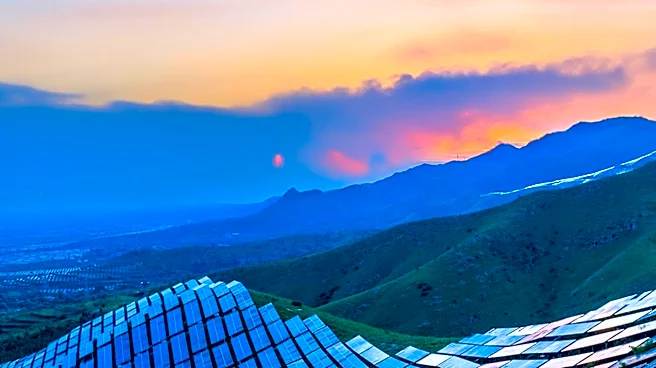
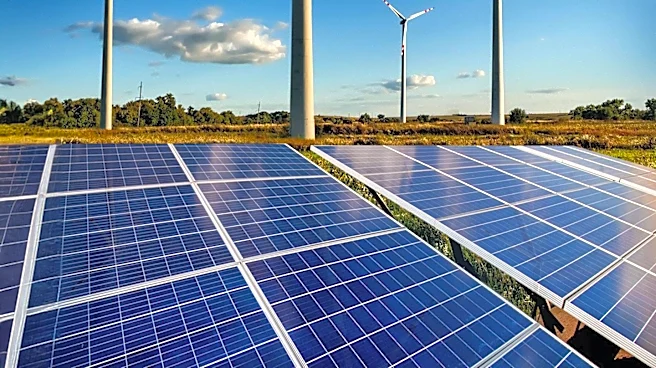
The UK has seen a significant increase in its solar capacity, reaching 22.8 GW by the end of June 2026. This growth is attributed to 27,391 new solar installations in June alone, marking the second highest monthly volume on record. The increase in capacity includes
the largest operational solar farm in the UK, the 373 MW Cleve Hill solar farm. The UK government has also secured 4.9 GW of capacity in its seventh Contracts for Difference (CfD) allocation round, with expectations for 1.87 GW to come online by 2028 and 3 GW by 2029. New regulations set to take effect on August 27 will lower the barrier for entry into the distributed solar market, allowing households to self-install systems up to an 800 W limit per electrical circuit.
Why It's Important?
The expansion of solar capacity in the UK is a critical step towards achieving energy security and reducing carbon emissions. The increase in installations and capacity reflects a growing trend towards renewable energy sources, which is essential for meeting climate goals. The new regulations facilitating self-installation of solar systems could democratize access to solar energy, particularly benefiting the rental sector. This shift not only supports environmental objectives but also stimulates economic growth by creating jobs in the renewable energy sector. The involvement of major retailers and manufacturers indicates a robust market response, potentially leading to further innovations and cost reductions in solar technology.
What's Next?
With the application window for the eighth CfD allocation round closing on August 7, 2026, further developments in solar capacity are anticipated. The upcoming regulatory changes are expected to encourage more households to adopt solar energy, potentially leading to a surge in installations. Stakeholders, including manufacturers and retailers, are preparing for the launch of new products aligned with these regulations. The continued growth in utility-scale solar projects suggests that the UK is on track to significantly increase its renewable energy capacity in the coming years, contributing to its long-term energy strategy.