






What's Happening?
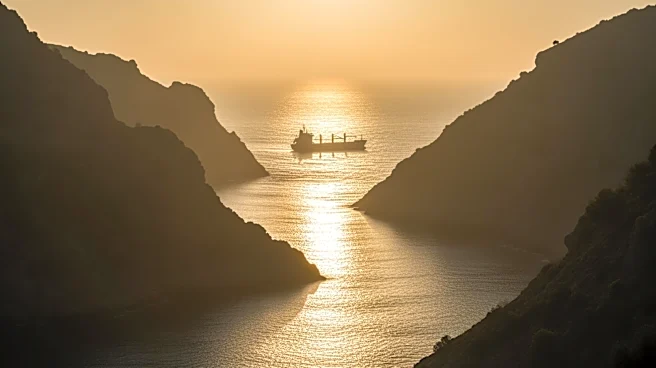
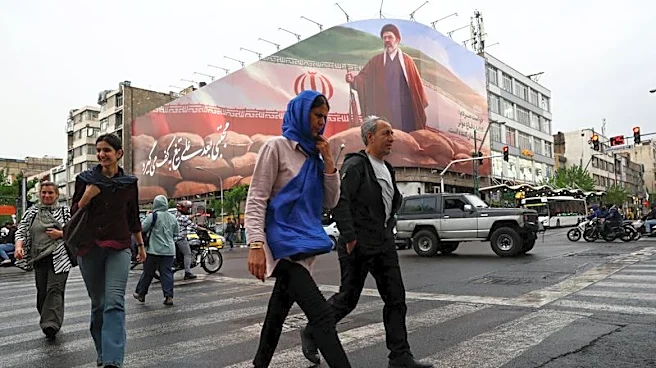
President Trump has expressed dissatisfaction with a recent proposal from Iran regarding the management of the Strait of Hormuz. The proposal, which was discussed with Trump's national security aides, suggests opening the Strait and addressing Iran's
nuclear program at a later date. However, Trump is reportedly unhappy because the proposal does not directly address the nuclear issue. The U.S.-Iran conflict remains tense, with energy supplies from the region being affected. The Strait of Hormuz is a critical waterway for global oil transit, and its closure has led to reduced energy supplies and increased tensions in the region.
Why It's Important?
The Strait of Hormuz is a vital chokepoint for the global oil supply, and any disruption can have significant economic repercussions worldwide. President Trump's insistence on addressing Iran's nuclear program highlights the ongoing concerns about nuclear proliferation and regional security. The U.S. seeks to ensure the free flow of oil through the Strait while also curbing Iran's nuclear ambitions. The failure to address these issues in the proposal could prolong the conflict, affecting global oil prices and economic stability. Stakeholders in the energy sector, as well as international diplomatic circles, are closely monitoring the situation.
What's Next?
The U.S. administration is likely to continue discussions with allies and international partners to find a resolution that addresses both the security of the Strait of Hormuz and Iran's nuclear program. Diplomatic efforts may intensify to prevent further escalation and to secure a comprehensive agreement. The international community, including the United Nations, may play a role in facilitating dialogue between the U.S. and Iran. The outcome of these discussions could have lasting implications for regional stability and international relations.