









What's Happening?
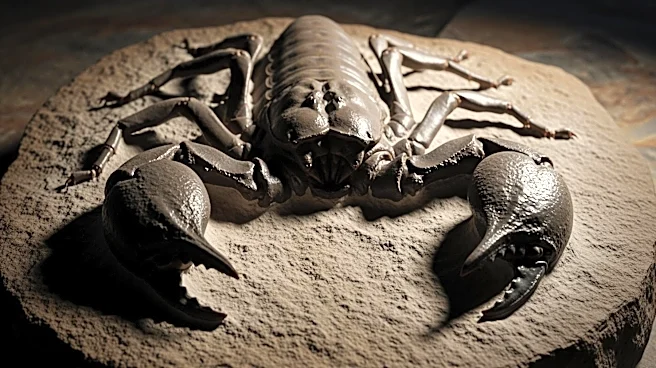
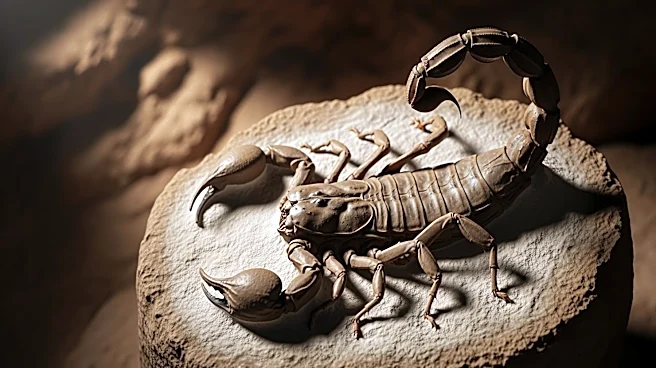
Scientists have identified the largest known scorpion, Praearcturus gigas, which lived approximately 415 million years ago in what is now Great Britain. The scorpion, measuring over 3 feet in length, was discovered through a re-examination of fossils
at London's Natural History Museum. Initially misidentified as a crustacean, the scorpion's true nature was revealed through modern analysis techniques. The discovery provides new insights into the early Devonian period, a time when life was primarily aquatic. The scorpion's size and features suggest it lived an amphibious lifestyle, feeding on primitive fish. This finding highlights the importance of revisionary science in understanding evolutionary biology and the history of life on Earth.
Why It's Important?
The identification of Praearcturus gigas as a scorpion rather than a crustacean reshapes our understanding of arthropod evolution and the ecological dynamics of the Devonian period. This discovery underscores the significance of revisiting historical specimens with modern technology, which can lead to new scientific insights and corrections of past misconceptions. The study also emphasizes the role of large arthropods in ancient ecosystems and their adaptation to varying environmental conditions. Such findings contribute to a broader understanding of biodiversity and evolutionary processes, offering valuable context for current studies on climate change and species adaptation.