





What's Happening?
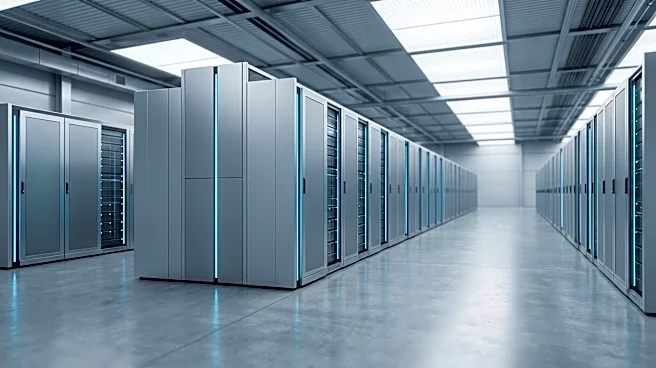
U.S. data centers consumed approximately 176 terawatt-hours (TWh) of energy in 2023, accounting for about 4.4% of the nation's total electricity use, according to a report by Lawrence Berkeley National Laboratory. Projections indicate that data center energy consumption
could double or triple by 2028, primarily driven by the increasing energy demands of Artificial Intelligence (AI) infrastructure. The International Energy Agency (IEA) forecasts that global data center electricity consumption will rise from 447 TWh in 2025 to over 1,200 TWh by 2030, with AI-focused data centers experiencing even faster growth, potentially tripling their electricity consumption between 2025 and 2030. This surge in demand is attributed to AI infrastructure consuming significantly more energy and computing resources than traditional IT systems, as neural networks require billions of operations for a single response. A single advanced server rack in a data center could demand as much power as 65 households by 2027. Nearly half of the world's data centers are located in the United States, with 90% of AI-specialized cloud compute capacity concentrated in the U.S. and China.
Why It's Important?
The projected doubling or tripling of U.S. data center energy consumption by 2028 poses significant challenges and opportunities for the nation's energy infrastructure and economy. This rapid increase in demand, largely fueled by AI, will strain existing electricity grids, potentially leading to regional supply shortfalls and increased electricity prices for consumers if not adequately addressed. The need for reliable, affordable, and readily available electricity is becoming a critical factor in determining where new AI capacity will be developed. This situation creates a strong impetus for investment in new power generation capacity, including natural gas, renewables, and nuclear energy, as well as grid upgrades and advanced energy management systems. Technology companies are increasingly entering into long-term agreements with power producers and investing in sustainable data center infrastructure to meet environmental targets and reduce energy costs. The shift towards green data centers, incorporating energy-efficient servers, advanced cooling systems, and renewable energy, is becoming a strategic priority for hyperscale cloud providers, enterprises, and governments, impacting the market for green data center technologies, which is forecasted to reach US$251.51 billion by 2033.
What's Next?
To address the escalating energy demands, the U.S. is seeing major initiatives in power generation and infrastructure buildout. PJM Interconnection LLC, which manages North America's largest grid, is actively seeking new power supplies to mitigate potential electricity shortages by summer 2027, with plans to match proposed data centers with new power plants. The U.S. Department of Energy (DOE) is backing projects like Constellation Energy Group's plan to restart the Three Mile Island nuclear power plant with a $1 billion loan, aiming to restore reliable nuclear energy to the grid. Additionally, the DOE, in partnership with SoftBank and AEP Ohio, plans to redevelop DOE land in Southern Ohio to build 10 gigawatts (GW) of new power generation, including 9.2 GW of natural gas, to power a new 10 GW data center development. Generac Power Systems is investing $250 million to expand its manufacturing of generators for data centers, with an order backlog of $1.6 billion. These efforts highlight a concerted push to increase power generation capacity and upgrade grid infrastructure to support the burgeoning AI data center sector. Furthermore, states like Pennsylvania are implementing new regulations, such as the Governor’s Responsible Infrastructure Development (GRID) Requirements, to ensure data center developers secure incremental capacity, procure clean energy, and cover infrastructure costs, giving local communities more control over development.
Beyond the Headlines
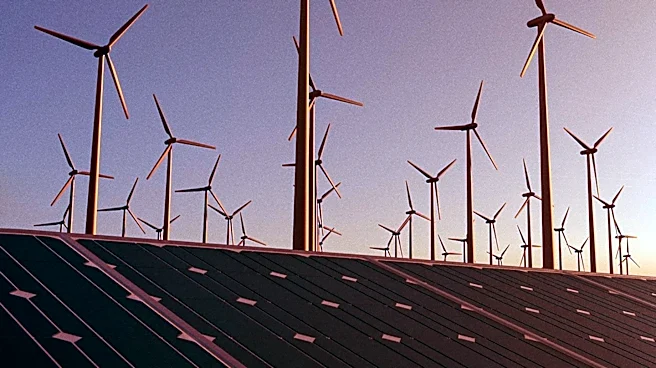
The surge in AI-driven data center energy consumption extends beyond immediate power supply concerns, raising deeper implications for environmental sustainability, technological innovation, and regulatory frameworks. The increased demand for electricity, if met by fossil fuels, could complicate climate goals, highlighting the critical need for a transition to cleaner energy sources. This is driving significant investment and innovation in renewable energy, nuclear power, and advanced geothermal technologies, with companies like Google signing deals for nuclear capacity to power data centers. The focus is shifting from merely measuring Power Usage Effectiveness (PUE) to a more holistic view of sustainability, incorporating Water Usage Effectiveness (WUE), Carbon Usage Effectiveness (CUE), and Renewable Energy Factor (REF). The physical constraints on supply chains for critical components like transformers and advanced semiconductors, coupled with pressures on spatial planning and grid connection procedures, underscore the need for integrated planning between the technology and energy sectors. This situation is also fostering new business models where companies that can solve system-level problems, such as power availability, thermal efficiency, and intelligent load management, will gain a competitive advantage, moving value towards grid flexibility and energy management solutions.