





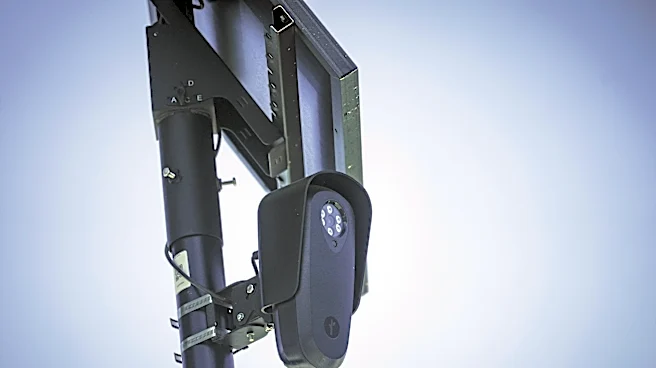


What's Happening?
The city of Springfield, Georgia, has voted unanimously to terminate its contract with Blue Line Solutions, the company operating automated speed detection cameras in the Springfield Elementary School Zone. This decision, made on August 11, comes after
the implementation of House Bill 651, signed by Governor Brian Kemp on May 12, which grants local governments the option to discontinue the use of school-zone speed cameras. Additionally, Blue Line Solutions proposed a contract amendment that would have either extended enforcement hours or significantly increased their share of ticket revenue from 35% to 65%. City officials determined that continuing the contract under these new terms was not in the best interest of Springfield, especially given resident complaints about the number of tickets issued.
Why It's Important?
This decision by Springfield reflects a broader reevaluation by local governments regarding the use of automated enforcement technologies, particularly in light of new state legislation. House Bill 651 empowers municipalities to assess the efficacy and public perception of such systems, moving away from mandatory usage. For residents, the termination of the contract addresses concerns about the volume of tickets and the financial implications of the program. While Blue Line Solutions cited a significant reduction in speeding violations, the city prioritized community sentiment and financial prudence. This move could influence other Georgia municipalities to reconsider their own school-zone camera contracts, potentially leading to a statewide shift in how speed enforcement is managed near schools.
What's Next?
The contract with Blue Line Solutions is set to officially terminate on September 11. Following this, the Springfield Police Department will resume full responsibility for enforcing speed limits in the school zone through traditional methods. City officials have assured the public that safety measures will continue to be a priority, with police maintaining their existing presence and traffic control efforts. This transition will test the effectiveness of traditional enforcement in maintaining school zone safety compared to automated systems. Other cities in Georgia may observe Springfield's experience closely as they consider their options under the new state law, potentially leading to similar contract terminations or renegotiations across the state.
Beyond the Headlines
The debate over school-zone speed cameras touches on complex issues of public safety, revenue generation, and civil liberties. While proponents argue that cameras enhance safety by deterring speeding, critics often raise concerns about their use as revenue tools and the potential for disproportionate ticketing. Springfield's decision highlights the tension between these perspectives and the importance of local government accountability to its constituents. This event could spark a wider discussion about the role of technology in law enforcement, the balance between automated and human intervention, and the ethical considerations of privatizing aspects of public safety. It also underscores the power of state legislation to reshape local governance and policy implementation.