





What's Happening?
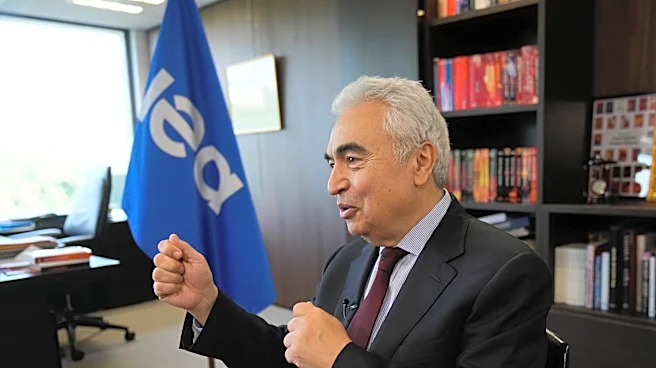
The International Energy Agency (IEA) has warned that Europe could run out of jet fuel in approximately six weeks if the current blockade of the Strait of Hormuz continues. This blockade, a result of the ongoing conflict involving Iran, has severely disrupted
the flow of oil and gas supplies. IEA Executive Director Fatih Birol described the situation as the largest energy crisis on record, with potential flight cancellations looming if the blockade is not lifted. The crisis has already led to increased energy prices, affecting gasoline, gas, and electricity costs. The economic impact is expected to be uneven, with developing countries in Asia, Africa, and Latin America facing the most severe consequences. The conflict has also caused significant damage to energy facilities in the Persian Gulf, complicating recovery efforts.
Why It's Important?
The potential jet fuel shortage poses a significant threat to the aviation industry and the broader global economy. Flight cancellations and increased operational costs could lead to higher travel expenses and reduced accessibility, affecting both consumers and businesses. The crisis highlights the strategic importance of the Strait of Hormuz, a critical chokepoint for global oil supplies. The ongoing conflict underscores the vulnerability of energy supplies to geopolitical tensions, with potential repercussions for inflation and economic stability, particularly in weaker economies. The situation also raises concerns about the precedent set by Iran's toll system for ships, which could influence future geopolitical and economic dynamics.
What's Next?
If the blockade of the Strait of Hormuz persists, the energy crisis could worsen, with more severe economic consequences. Governments and airlines may need to explore alternative energy sources or routes to mitigate the impact. The IEA has warned that without a resolution to the conflict, the global energy landscape could be reshaped, potentially accelerating the adoption of alternative energy technologies. The situation also highlights the need for international cooperation to address energy vulnerabilities and promote sustainable energy solutions.
Beyond the Headlines
The crisis underscores the complex relationship between energy and geopolitics, with energy resources often at the center of international conflicts. The current situation may prompt a reevaluation of energy security strategies and encourage investment in more resilient and diversified energy infrastructures. Additionally, the crisis could serve as a catalyst for international cooperation to address energy vulnerabilities and promote sustainable energy solutions.