






What's Happening?
A new study published in Nature Food highlights the significant impact of land degradation on global food production. Led by an international team including Professor Nima Shokri from the Hamburg University of Technology, the research provides the first
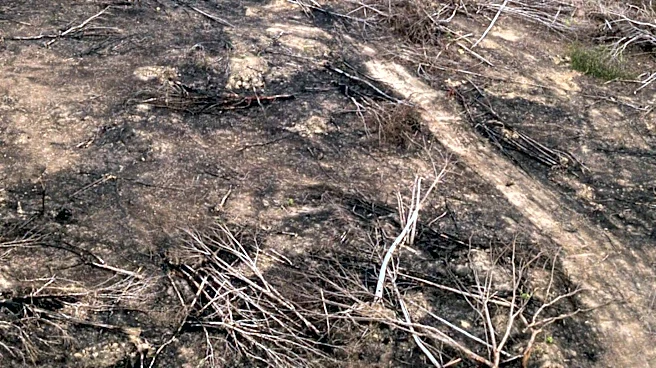
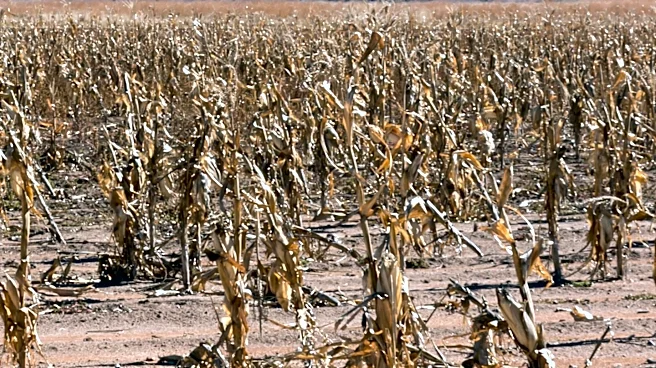
global empirical evidence linking land degradation to reduced agricultural productivity. The study reveals that a 10% increase in land degradation correlates with a 2% increase in crop yield gaps, which is the difference between current yields and potential yields under optimal conditions. This degradation results in an annual loss of approximately 20 million tonnes of crop production, equivalent to 52 trillion food calories, and around $4 billion in agricultural revenues. The study identifies geographic hotspots, including parts of the United States, where agricultural production is particularly vulnerable to land degradation.
Why It's Important?
The findings underscore the critical role of healthy soils in maintaining resilient food systems and highlight land degradation as a growing challenge for global food security. The study's implications are significant for both developing and industrialized nations, as it shows that land degradation affects highly productive agricultural systems worldwide. The research suggests that future agricultural policies should integrate sustainable land management practices to enhance food security and resilience to climate pressures. Investments in soil restoration and conservation agriculture are recommended to mitigate the adverse effects of land degradation and improve agricultural productivity.
What's Next?
The study advocates for integrating sustainable land management into agricultural policies to address the challenges posed by land degradation. This includes investments in soil restoration, conservation agriculture, and long-term soil monitoring. Such measures are expected to improve food security and strengthen resilience to climate change. The research highlights the need for interdisciplinary approaches to understanding and managing environmental systems, which could lead to more effective strategies for combating land degradation and its impact on food production.
Beyond the Headlines
The study's findings have broader implications for environmental and economic policies, emphasizing the need for a holistic approach to land management. By viewing soil protection and restoration as investments in food system resilience, policymakers can address both environmental and economic challenges. The research also highlights the importance of international collaboration in addressing global issues like land degradation, which requires coordinated efforts across borders to ensure sustainable agricultural practices and food security.