




What's Happening?
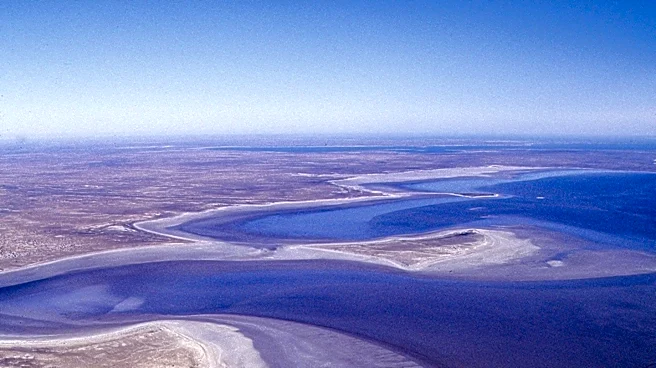
The Salton Sea is experiencing a significant reduction in its water levels, primarily due to more efficient irrigation practices and water transfers that have decreased agricultural return flows. This decline has been particularly pronounced since mitigation
deliveries, designed to slow the initial shrinkage, concluded in 2017. The Salton Sea, a terminal lake with no outlet, naturally accumulates salts as water evaporates. The reduced inflows exacerbate this process, leading to a smaller and saltier body of water. This historical context traces back to the Colorado River's diversion in 1905-1907, which created the modern Salton Sea, and its subsequent sustenance by agricultural drainage for decades. The current situation is a direct consequence of water policy changes, notably the 2003 Quantification Settlement Agreement.
Why It's Important?
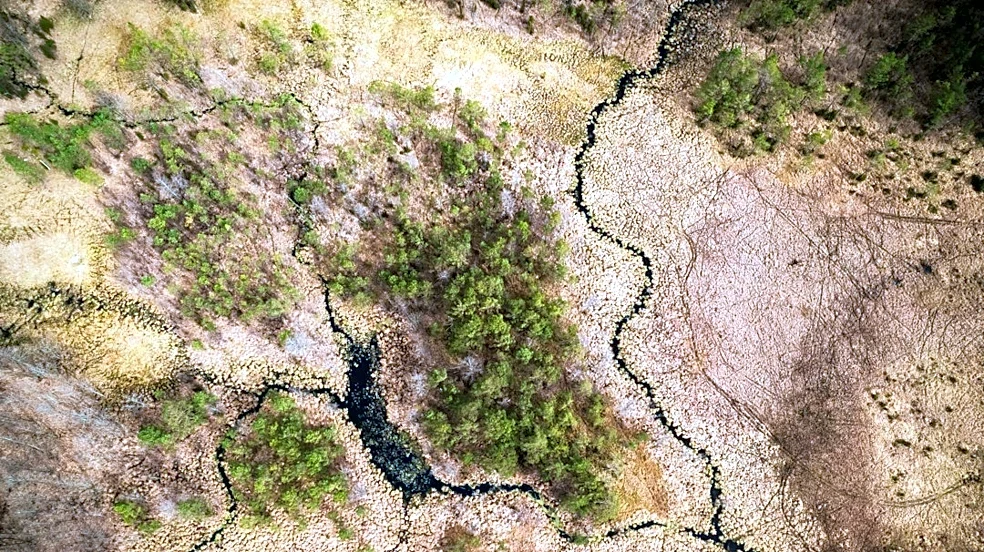
The shrinking of the Salton Sea has profound environmental, public health, and economic implications for the U.S., particularly for communities in Southern California. As the water recedes, it exposes vast areas of lakebed, or playa, which can become a source of airborne fine particulate matter when disturbed by wind. This dust poses a significant air quality hazard to nearby communities, which already face considerable air pollution burdens. Ecologically, the increased salinity and reduced water volume threaten the Salton Sea's role as a critical habitat for migratory birds along the Pacific Flyway. The situation also highlights the complex interplay between agricultural water use, environmental conservation, and public health policy in arid regions, underscoring the challenges of managing water resources in the face of climate change and growing demand.
What's Next?
California's Phase I: 10-Year Plan aims to address the consequences of the shrinking Salton Sea by targeting 29,800 acres for habitat creation and dust suppression projects by the end of 2028. These projects focus on building aquatic ponds, wetlands, and stabilizing exposed lakebed through various treatments like surface roughening and irrigated vegetation. The management program does not aim to recreate the former resort-era sea but rather to mitigate the environmental and health impacts of its decline. Federal, state, tribal, and local partners are evaluating longer-term alternatives, while research continues into the interaction of Salton Sea aerosols, agricultural emissions, regional dust, and cross-border pollution. Additionally, the potential for lithium extraction from geothermal brines in the southern Salton Sea region presents a new economic dimension, though it does not directly address the sea's water level issues.
Beyond the Headlines
The Salton Sea's predicament serves as a stark illustration of the long-term consequences of human intervention in natural hydrological systems and the challenges of balancing economic development with environmental sustainability. The historical narrative, from its accidental creation to its current state of decline, reflects evolving understandings of water management and ecological responsibility. The ongoing efforts to mitigate the impacts of its shrinkage raise ethical questions about the extent of human responsibility to remediate environmental damage and the equitable distribution of environmental burdens, particularly on vulnerable communities. The situation also underscores the need for integrated water resource management strategies that consider the interconnectedness of agricultural, urban, and environmental demands in a changing climate.