






What's Happening?
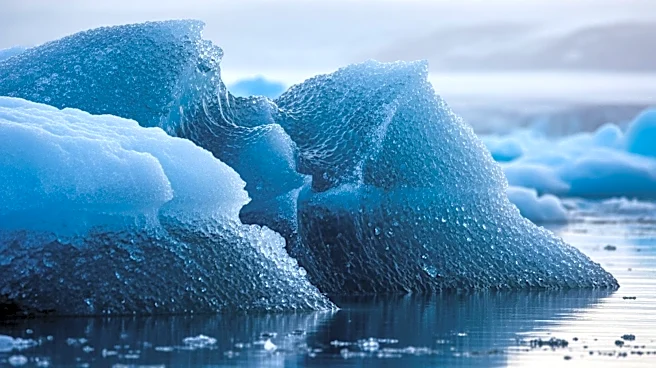
The Hektoria Glacier in Antarctica has experienced a record-setting retreat, losing about 25 kilometers in length between January 2022 and March 2023. This rapid change, the fastest observed in modern history, was facilitated by the glacier's unique geometry,
which allowed seawater to infiltrate and lift the ice off the ground. The glacier's retreat was exacerbated by the collapse of the Larsen B ice shelf in 2002, which had previously stabilized the glacier. The loss of Hektoria's ice tongue and grounded ice contributes directly to sea level rise, raising concerns about similar events at larger glaciers.
Why It's Important?
The retreat of Hektoria Glacier underscores the accelerating impact of climate change on polar ice masses. As glaciers lose ice, they contribute to rising sea levels, which can have widespread effects on coastal communities worldwide. The event serves as a warning of potential future changes in larger glaciers, which could have even more significant consequences. Understanding these processes is crucial for predicting future sea level rise and developing strategies to mitigate its impact. The study of Hektoria's retreat also highlights the importance of continued monitoring and research in polar regions.
What's Next?
New satellite technologies, such as NASA's NISAR and SWOT, are expected to enhance the monitoring of glacial changes, providing more detailed data on ice movement and thickness. Researchers are focusing on identifying other glaciers at risk of similar rapid retreats. As the Antarctic Peninsula continues to warm, more glaciers may lose their ice tongues, leading to further destabilization. The scientific community will likely increase efforts to model and predict these changes, informing global climate policy and adaptation strategies.