


What's Happening?
The U.S. Department of Homeland Security (DHS) has significantly expanded its Uyghur Forced Labor Prevention Act (UFLPA) Entity List by adding 43 companies based in China. This marks the largest single addition to the list since the UFLPA was enacted,
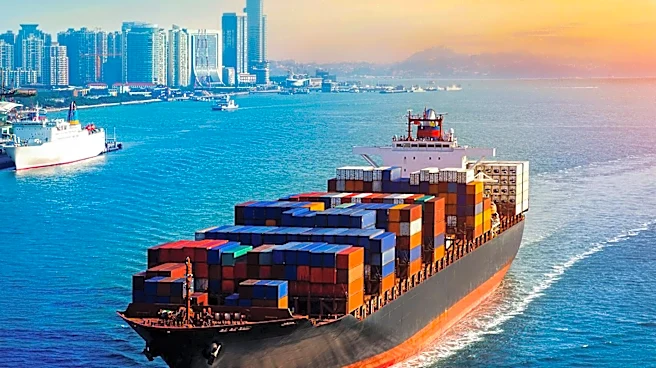
increasing the total number of listed entities to 187. The newly added companies span various sectors, including metals, textiles, tomatoes, and downstream products. The UFLPA prohibits the importation of goods into the United States that are produced wholly or in part in China's Xinjiang Uyghur Autonomous Region, or by entities identified on the UFLPA Entity List, due to concerns about forced labor. This expansion reflects an ongoing effort by the U.S. government to combat forced labor in supply chains and ensure that goods entering the U.S. market are not tainted by such practices.
Why It's Important?
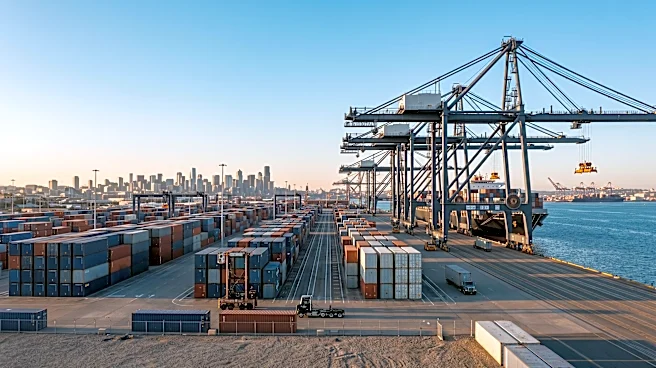
This substantial expansion of the UFLPA Entity List has significant implications for U.S. businesses and global supply chains. Companies importing goods from China, particularly those in the metals, textiles, and agricultural sectors, will need to meticulously review their supply chains to ensure compliance. The increased number of listed entities means a broader range of products and suppliers are now subject to heightened scrutiny, potentially leading to disruptions, increased compliance costs, and the need to re-evaluate sourcing strategies. For U.S. consumers, this action aims to ensure that products available in the market are free from forced labor, aligning with ethical consumption principles. The move also underscores the U.S. government's commitment to human rights and its willingness to use economic tools to address concerns about forced labor practices in other countries, particularly China.
What's Next?
Following this expansion, U.S. companies are expected to intensify their due diligence efforts to identify and mitigate risks associated with forced labor in their supply chains. This will likely involve enhanced auditing, supplier verification, and potentially diversifying sourcing away from regions or companies implicated in forced labor. The Department of Homeland Security will continue to enforce the UFLPA, and further additions to the Entity List are possible as investigations continue. Businesses that fail to comply could face significant penalties, including seizure of goods and reputational damage. This action may also prompt other countries to review their own policies regarding forced labor and supply chain transparency, potentially leading to a broader international effort to address these issues.
Beyond the Headlines
The expansion of the UFLPA list highlights the complex interplay between international trade, human rights, and geopolitical considerations. Beyond the immediate economic impact on businesses, this action sends a strong message about the U.S.'s stance on forced labor and its commitment to upholding ethical standards in global commerce. It also underscores the challenges of ensuring transparency and accountability in complex global supply chains, particularly when dealing with regions where labor practices are opaque or state-controlled. The long-term implications could include a reshaping of global manufacturing and sourcing patterns as companies seek to de-risk their supply chains and align with international human rights norms. This move could also fuel further debate and diplomatic tensions between the U.S. and China regarding trade practices and human rights.