










What's Happening?
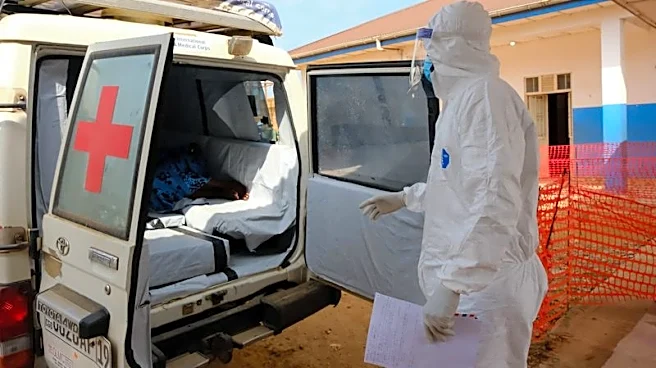
An Ebola outbreak in Congo and Uganda has resulted in over 200 deaths within a month, with cases surging by nearly 40% in a week. The outbreak, driven by the rare Bundibugyo strain, has reached 894 confirmed cases across 32 health zones in eastern Congo.
The Africa Centres for Disease Control and Prevention reports that the outbreak is the worst known at this stage, with up to 35,000 suspected potential contacts. The situation is exacerbated by overcrowded camps, armed conflict, and poor infrastructure, which hinder effective contact tracing and response efforts. Despite over $900 million pledged to combat the outbreak, only $90 million has been released, complicating the crisis further. The outbreak is concentrated in Congo's Ituri province, with cases also reported in North Kivu, South Kivu, and across the border in Uganda.
Why It's Important?
The escalating Ebola outbreak poses significant public health challenges in the affected regions, with potential implications for international health security. The lack of an approved vaccine or treatment for the Bundibugyo strain complicates containment efforts. The outbreak's spread across borders highlights the need for coordinated international response and support. The limited release of pledged funds and personnel shortages further strain efforts to control the outbreak. The situation underscores the vulnerability of regions with ongoing conflict and poor infrastructure to infectious disease outbreaks, emphasizing the need for sustained investment in health systems and emergency preparedness.
What's Next?
Efforts to control the outbreak will likely focus on increasing funding and personnel to improve contact tracing and treatment. The Africa CDC and international partners may intensify diplomatic efforts to secure the release of pledged funds. Experimental treatments, such as monoclonal antibodies, are being developed and may play a role in future containment strategies. The international community's response will be crucial in preventing further spread and mitigating the outbreak's impact. Monitoring the situation and adapting strategies as new information becomes available will be essential for effective management.